Hey there, Syringe Molds
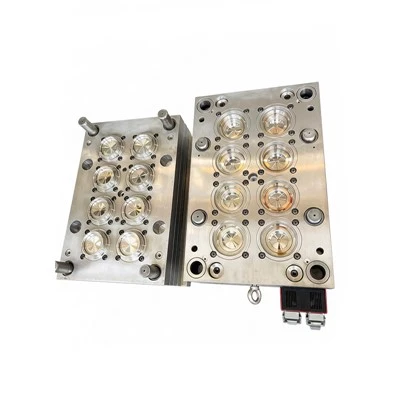
If you’re reading this, odds are you’re either a pharma product manager, a medical device engineer, or someone who’s been Googling “custom syringe mold design cost” at 2 a.m. because your clinical trial timeline just got pushed up and you need to lock in a mold stat. Let me cut to the chase: there’s no one-size-fits-all number for this. But as a syringe molds supplier who’s been in the game for more than a decade—watching 100+ startups and big pharma fumble through mold quotes, misjudge timelines, and panic when their design doesn’t line up with manufacturing reality—I can break this down like I would with a new client leaning over my workshop counter. No fancy jargon, no generic pricing tables, just real talk on what actually drives the cost of your custom syringe mold.
First off, let’s get one thing straight: a syringe is deceptively simple on the surface, but the mold that makes it? That’s a precision Swiss watch in a metal box. The barrel, the plunger, the flange, the tiny vent holes, the Luer lock tip—every single feature has to be microns-perfect. Mess up one millimetersized draft angle and your plunger will stick mid-injection, which is a nonstarter for FDA or CE approval. So when someone asks “how much is a custom syringe mold?” the first thing I do is ask three non-negotiable questions: what’s your syringe spec, what’s your expected production volume, and how fast do you need this? Those aren’t trivial—they’re the core of every quote I send out.
Let’s start with the syringe itself because that’s the biggest variable. If you’re making a generic 3mL Luer slip syringe for a over-the-counter vaccine, we have off-the-shelf mold bases that we can tweak in a couple weeks. But if you’re doing a custom 1mL prefilled syringe with a integrated sensor for dosage tracking, or a specialty syringe for eye drops that has a ultra-thin wall (0.2mm, yeah, that’s thinner than a sheet of paper), that’s a whole different ballgame. Material choice for the mold tooling alone changes things: we use P20 steel for high-volume runs (it’s durable, cost-effective) but if you need mirror-polished cavities for a Class III medical device, we drop in S136 stainless steel. That steel is a third more expensive upfront, but it resists corrosion way better—critical if you’re molding sterile parts for injectables that touch human tissue.
Then there’s the design phase itself, which a lot of people sleep on. Wait, you thought “custom mold design” just means drawing a part and cutting metal? Hell no. We don’t just take your CAD file and hit print. We do what’s called “design for manufacturability (DFM)” reviews—multiple rounds, usually. For a standard syringe, that might be two DFM checks to make sure the ejection pins won’t leave a blemish on the barrel that would get flagged during quality testing. For a specialty syringe, we might do four or five rounds, including flow simulation to make sure the plastic resin fills the cavity evenly. If you mess up flow, you get sink marks or warping—defects that would get your batch rejected by the FDA before it even leaves your warehouse. Each of those DFM rounds takes time, and that time gets factored into the design cost. I’ve had clients come to me with a CAD they “did themselves in 30 minutes on FreeCAD” and ask if we can just build the mold—no, because that CAD doesn’t account for how the plastic will shrink when it cools, which is a huge deal for syringe parts. Shrinkage rates for polypropylene (the most common syringe plastic) are around 1.5-2%, and if your mold isn’t calibrated for that, every part will be slightly off spec.
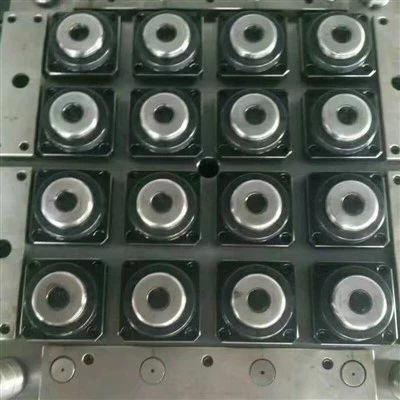
Next, production volume. This is the make-or-break for cost. If you need 1 million syringes a year, we can build a mold with two cavities—meaning it makes two syringes every shot—costing around $15k to $25k total. But if you’re scaling up to 100 million syringes a year? We build a 16-cavity or even 32-cavity mold. Those aren’t just bigger—they require precision machining on a 5-axis CNC, which is way more expensive than a 3-axis, and the mold base has to be rigid enough to handle thousands of injection cycles without warping. A 32-cavity syringe mold will run you anywhere from $60k to $120k, easy. And before you ask: no, you don’t need a 32-cavity mold for a 10k-unit pilot run. Don’t let a sales guy push that on you. I’d rather quote a smaller mold for your pilot, so you don’t waste money on extra cavities you’ll never use. That’s the kind of stuff that gets people burned on custom syringe molds.
Wait, what about post-design touches? A lot of clients don’t realize that the mold’s finish matters, too. If you need the barrel to be transparent so clinicians can see liquid levels, we need the cavity polished to a mirror finish—adds a few thousand bucks. If you need a custom graduation mark on the barrel (not just the standard 1mL, 2mL lines), we can etch it into the cavity or use a laser marking insert—another $500 to $2k, depending on how many marks. And if you need a sterile-compatible mold, meaning it can withstand autoclaving or gamma sterilization? We have to use materials that don’t leach chemicals, and we build it with vents that don’t trap bacteria—adds another 10% to the total cost.
Now, let’s talk about hidden costs that no one tells you about. Rush orders, for one. If you need a mold in 2 weeks instead of the standard 6-8 weeks for a standard design, we have to re-route our machinists from other jobs, work overtime, and skip some of the secondary inspections. That adds a 50% to 100% premium. I had a startup a couple years back come to me with a trial deadline for a phase 1 clinical trial that was 3 weeks away—they thought a custom mold would cost $10k, no rush, but when they asked for it in 3 weeks, it ended up being $22k. Worth it for them? Yeah, because missing the trial timeline would’ve cost them way more. But don’t expect rush pricing to be the same as standard.
Another hidden one: design revisions. The standard quote includes two design tweaks—like adjusting the flange size by 0.5mm or moving an ejection pin. But if you come back a month later and say “actually, can we change the Luer tip to a custom one for our proprietary needle?” that’s a whole new DFM round, new cavity machining, and that’s extra. I always make sure to spell that out in the initial quote, but you’d be surprised how many clients gloss over the fine print and get mad when they get a revision bill.
Wait, let’s put this all into real numbers, no vague stuff. For a standard 3mL Luer slip syringe, pilot run (10k-100k units): design is $2k-$4k, mold is $12k-$20k, total is $14k-$24k. For a mid-volume run (1M-10M units): design $3k-$6k, mold $25k-$45k, total $28k-$51k. For high-volume (50M+ units, pharma-grade prefilled syringe): design $8k-$15k, mold $70k-$130k, total $78k-$145k. And that’s for standard specs. Add in custom features, rush orders, specialty materials, and you can easily add 20-50% to that.
But here’s the thing: the cheapest quote isn’t always the best. I’ve seen clients go with a mold shop that quoted $8k for a standard 3mL mold, only to get a mold that leaked plastic at the first run, had sink marks that failed QC, and took 12 weeks instead of 6. They ended up paying another $10k to fix it and missing their launch date. As a syringe molds supplier, I’ll tell you: quality control in mold making isn’t an afterthought. Every single cavity has to be tested, every ejection pin checked, every draft angle measured with a coordinate measuring machine (CMM)—that’s not cheap, but it’s non-negotiable for a part that goes into people’s bodies.
So what should you do next? If you’re ready to get a real quote, don’t just send a “how much for a custom syringe mold?” email. Send me your CAD file (even a rough draft is fine!), tell me your expected production volume, your timeline, and any special features you need—like sterile compatibility, custom graduations, or a prefilled cartridge. I’ll send you a DFM check for free, no strings attached, and a quote that’s transparent, no hidden fees. No vague “call us for a quote” garbage.
Wait, one last thing: I’ve been in this industry long enough to know that most clients don’t just need a mold—they need a partner. The good syringe mold suppliers don’t just build your mold and vanish. They stand behind it. If there’s a defect in the mold within the first 100k cycles, we fix it for free. We help you troubleshoot if your injection molder is having issues with cavity fill. We don’t just quote a number and disappear. That’s the real cost of a custom syringe mold: it’s not just the metal and the machining, it’s the support you get when things go wrong.
If that’s the kind of supplier you want to work with, hit me up. No generic forms, no endless waits. We can hop on a quick call, walk through your specs, and get you a real quote in 24 hours.
Custom Bottle Cap Molds References:
- International Medical Device Regulators Forum (IMDRF). (2021). Design Control Guidance for Medical Device Manufacturers.
- Society of Plastics Engineers (SPE). (2022). Injection Molding of Medical Devices: DFM Best Practices.
- U.S. Food and Drug Administration (FDA). (2023). Pre-Submission Guidance for Combination Products Including Prefilled Syringes.
- Milstead, P. (2020). Mold Making for Medical Applications: Cost Drivers and Quality Standards. Industrial Press.
Taizhou Koni Mould Co., Ltd.
As one of the most professional syringe molds manufacturers and suppliers in China, we also support customized service. Please feel free to wholesale high quality syringe molds made in China here from our factory. For pricelist, contact us now.
Address: No. 97 Jinju Road, Chengjiang Subdistrict, Huangyan District, Taizhou City, Zhejiang Province
E-mail: kn@kenimould.com
WebSite: https://www.kenimouid.com/
