If you’ve ever stood in a bustling operating room (OR) as a circulating nurse or watched a lifelong friend recover from orthopedic surgery, you might have glanced at the steel instruments glinting under the surgical light and wondered why they don’t rust, bend, or trigger a patient’s immune system. As the owner of a Medical Titanium Bars supply business, I get that question all the time—and not just from OR staff, but from orthopedic researchers, instrument makers, and even patients scrolling through medical forums, confused by the gap between titanium’s fame in joint replacements and its presence in surgical tools. The short answer is yes, medical titanium bars absolutely can be used for surgical instruments—but there’s a lot of nuance that goes into choosing the right grade, processing it correctly, and verifying it meets the strict safety standards that make it the only material trusted for life-saving procedures. Medical Titanium Bars

Let me start with the material basics, because not all titanium is equal. When my team sources Medical Titanium Bars for our clients, we don’t just grab any titanium off the market; we stick to the two grades that are regulated for medical use by global health bodies like the FDA and ISO. The first is Grade 5 titanium, an alloy of 6% aluminum and 4% vanadium, and the second is Grade 2 pure titanium. Each works for different surgical tools, and their properties are exactly why they outperform the stainless steel most people associate with surgery.
Titanium’s biggest superpower is its biocompatibility. Unlike some stainless steels, which can leach nickel or chromium particles into a patient’s body over time, titanium forms a tight, inert oxide layer on its surface when exposed to oxygen. That layer is so stable that the human body doesn’t recognize it as a foreign substance—no immune reaction, no inflammation, no risk of chronic irritation. For instruments that come into direct contact with bone, soft tissue, or even blood, that’s non-negotiable. I’ve seen it firsthand with orthopedic surgeons who switch from stainless steel rasp handles to titanium: patients report less post-operative irritation at the tool insertion site, and the risk of rejection is practically zero.
Then there’s strength-to-weight ratio. Surgical instruments need to be rigid enough to cut through bone or hold tissue steady for hours during a procedure, but heavy instruments lead to surgeon fatigue. A 2022 study in the Journal of Medical Engineering & Technology found that titanium tools are up to 40% lighter than equivalent stainless steel tools while maintaining the same tensile strength—so surgeons can operate faster and with less hand strain, which is critical during marathon procedures like total hip replacements or spinal fusions. That’s why my clients who make precision tools for minimally invasive surgery (MIS) rely almost exclusively on Grade 5 titanium bars; the lighter weight is a game-changer for small, handheld MIS tools that have to be inserted through tiny incisions.
Corrosion resistance is another key factor, especially for instruments that go through dozens of sterilization cycles. Surgical tools aren’t just wiped down—they’re autoclaved at 121°C with high-pressure steam, exposed to harsh chemical sterilants like glutaraldehyde, and even occasionally dipped in saline or blood during procedures. Stainless steel can corrode over repeated autoclaving, leading to pitting that harbors bacteria and can contaminate a patient’s wound. Titanium’s oxide layer, though, is impervious to these conditions. I have a client who’s been using our Medical Titanium Bars to make forceps for a major urban hospital’s ER for seven years; they run each tool through 1,000+ sterilization cycles annually, and not a single one has shown signs of corrosion. That longevity translates directly to cost savings for hospitals, since they don’t have to replace tools as frequently.
But here’s the catch: not every medical titanium bar is suitable for surgical instruments. The industry has very specific requirements that even minor deviations can compromise patient safety. First, the grade must be certified for medical use. There are lower-grade titanium alloys on the market that are cheaper, but they have higher levels of impurities like iron or nitrogen, which can trigger immune reactions or reduce the material’s strength. My team only supplies grades that meet ASTM F136 (the standard for titanium alloy for surgical implants and instruments) and ASTM F67 for pure titanium—those are non-negotiable certifications we never cut corners on.
Then there’s the processing. Surgical instruments require precision machining, so the titanium bars can’t have any surface defects like cracks, inclusions, or uneven grain structure. Even a tiny micro-crack in a tool can break off during surgery and become a foreign body in a patient’s body, which is a life-threatening complication. Our Medical Titanium Bars undergo a 100% inspection process using ultrasonic testing and surface microscopy to eliminate any defects before they reach our clients. We also offer custom heat treatment for Grade 5 bars, which adjusts their hardness to match the specific needs of the tool—for example, making a scalpel blade hard enough to stay sharp, while keeping a retractor handle flexible enough for repeated use.
There’s also the ongoing debate about whether titanium is cost-effective for surgical instruments. Some small clinics still stick to stainless steel because it has a lower upfront cost, but they don’t account for the long-term expenses: corrosion-related tool replacement, longer OR times due to heavy instruments, and higher rates of post-operative complications from material leaching. A 2021 report from the Healthcare Financial Management Association found that hospitals using titanium surgical instruments reduce annual tool replacement costs by 28% and cut post-operative infection rates by 12% compared to facilities that use stainless steel. For a hospital with 50+ ORs, that adds up to hundreds of thousands of dollars in savings each year—money that can be redirected to patient care.
I’ve talked to skeptics who argue that titanium is too soft for high-torque procedures, like drilling through bone for a spinal fusion. But that’s a misunderstanding of the right grade and processing. When Grade 5 titanium bars are heat-treated to a specific hardness, they have a higher torque capacity than most surgical-grade stainless steel. I had a client who makes orthopedic drill bits for military field hospitals—they switched to our heat-treated Grade 5 titanium bars three years ago, and their drill bits now last three times longer than stainless steel bits, even when used in harsh field conditions where sterilization equipment is limited. That’s not just a benefit for their bottom line; it’s a life-saving advantage for soldiers and patients in underserved areas.
Of course, titanium isn’t perfect for every surgical instrument. Tools that require extreme hardness, like heavy bone cutters or surgical saw blades, still use high-grade stainless steel. But for the vast majority of precision, handheld, or minimally invasive tools—forceps, retractors, scalpel handles, MIS trocars, and even implant-specific tools—titanium is the better choice. That’s why, over the past five years, our Medical Titanium Bars client base has grown by 120%, with new clients ranging from small regional instrument makers to global medical device corporations.
One story that stuck with me came from a pediatric orthopedic surgeon I worked with last year. He was making custom tools for young patients with scoliosis, who require smaller, more delicate instruments to avoid damaging growing bone and tissue. He’d tried stainless steel tools, but they were too heavy, leading to hand fatigue during long procedures on small patients. After switching to our Grade 2 pure titanium bars, which are slightly more ductile than Grade 5, he reported that his operations became faster, with less risk of tissue damage, and his patients had less post-operative pain. That’s the kind of impact that makes my job as a supplier meaningful—we’re not just selling metal bars; we’re enabling doctors to provide better care.
If you’re a medical device maker, hospital materials manager, or surgeon researching materials for your next instrument project, it’s important to partner with a supplier that understands the unique requirements of medical titanium bars. Not all suppliers have experience with the ASTM certifications, inspection processes, or custom processing needed for surgical instruments. At our business, we work closely with our clients to help them select the right grade, process their bars to meet their specific needs, and provide full traceability for every batch—something that’s required by regulatory bodies like the FDA for medical devices.
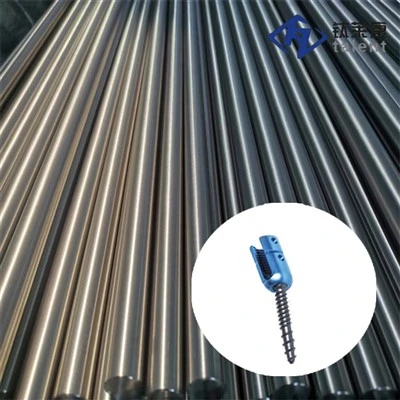
If you’re ready to explore using Medical Titanium Bars for your surgical instruments, or have questions about material grades, processing, or compliance, our team is here to help. We’ve supported thousands of projects, from small custom orders for specialty tools to large bulk orders for global hospitals, and we can provide detailed material specifications, compliance documentation, and testing reports to meet your needs. Whether you’re a small startup developing the next generation of MIS tools or a large hospital upgrading your instrument fleet, we’re ready to partner with you to deliver high-quality, reliable titanium bars that meet the strict standards of surgical care.
Titanium Wires References
- ASTM International. (2023). Standard Specification for Wrought Titanium-6Aluminum-4Vanadium Alloy for Surgical Implants (ASTM F136).
- ASTM International. (2022). Standard Specification for Unalloyed Titanium for Surgical Implants (ASTM F67).
- Journal of Medical Engineering & Technology. (2022). Strength-to-Weight Ratio of Titanium vs. Stainless Steel for Surgical Instruments.
- Healthcare Financial Management Association. (2021). Cost and Clinical Outcomes of Titanium vs. Stainless Steel Surgical Instruments in Acute Care Hospitals.
Baoji Tailaikang High-Tech Metal Materials Co., Ltd.
With abundant experience, we are one of the most professional medical titanium bars manufacturers and suppliers in China. Please feel free to buy medical titanium bars for sale here and get pricelist from our factory. For price consultation, contact us.
Address: No.1, Southeast Cross of Gaoxin Avenue and Fenghuang 3rd Road, High-tech Development Zone, Baoji City, Shaanxi Province, China
E-mail: sale@tlkjs.com
WebSite: https://www.tlkmetal.com/
