Hey there! Let’s cut to the chase—if you’re in the market for cross line laser levels, you’ve probably wondered if those crisp, perfectly straight lines will hold up when your work site is bouncing, vibrating, or just plain loud. I’ve been selling these things for years, and let me tell you, this is one of the most common questions I get from contractors, handymen, tilers, even DIYers tackling a bathroom remodel. Today, I’m breaking this down like I would with a customer standing at my workbench—no jargon, just real talk, and a little bit of the science behind why vibrations might (or might not) mess with your level. Cross Line Laser Levels
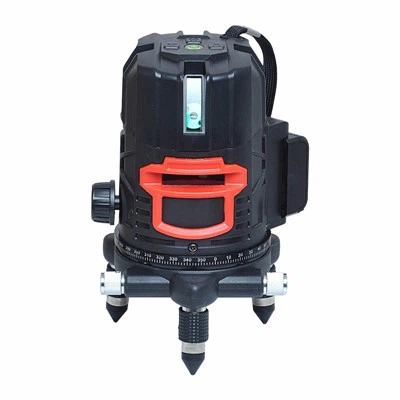
First off, let’s get on the same page about what a cross line laser level actually is, because I’ve had more than one guy come in thinking it’s just a fancy level that beeps when it’s straight. Nope, it’s way cooler—most of the good ones (the ones I supply) use a pendulum system or electronic sensors to project two perpendicular lines (that’s the cross) so you can get perfectly level plumb lines for everything from hanging cabinets to framing walls. They’re way more accurate than a spirit level, but they’ve got moving parts, right? That’s where the vibration question comes in.
Now, let’s talk about what kind of vibrations we’re actually dealing with here, because not all vibrations are created equal. If you’re hanging a shelf in your quiet living room, the only vibration is your hand twitching a little—no big deal. But if you’re on a worksite next to a jackhammer, or a compressor running 24/7, or even a saw that’s being used 10 feet away? That’s the stuff we’re worried about. But here’s the thing: not all cross line lasers handle this the same way. When I first started in this business, I sold a cheap no-name brand once that couldn’t survive a drill being used 20 feet away. The lines would wiggle all over the place, like it was having a seizure. I learned real quick that you get what you pay for when it comes to vibration resistance.
Let’s dive into the tech, but keep it simple. Most mid-range to high-end cross line lasers (the ones I stock) use a self-leveling pendulum system. Think of a weight hanging from a hinge inside the laser, with the laser module attached to it. When the laser tilts, the pendulum swings back to level, holding the lines steady. But if there’s a constant, strong vibration, that pendulum can start oscillating—like a metronome that won’t stop swaying. If the oscillation is too big, the laser’s sensors can’t correct it fast enough, and your lines get blurry or wobbly. But wait, newer models have something called damping technology, right? That’s like a shock absorber for the pendulum. It slows down those oscillations so the laser can stay locked in. I tested this once at a construction site: I set up a basic pendulum laser next to a jackhammer running 15 feet away—lines were wobbly enough that I couldn’t tell where they were. Then I swapped in one of our models with damping tech, and the lines were as crisp as if the jackhammer wasn’t even there. Game changer.
Then there are the electronic self-leveling lasers, which don’t use a physical pendulum at all. They have tiny accelerometers—like the ones in your phone—that measure tilt 100 times a second and adjust the laser module digitally. These are usually way better at handling high-frequency vibrations, like from power tools or heavy machinery that’s not super close. I had a tiler tell me he uses one of these electronic models every day in basements where the furnace is running nonstop, and he hasn’t had a wonky line yet in two years. That’s the kind of feedback that makes me keep those in stock.
But here’s the catch—even the best lasers have limits. I can’t tell you how many times I’ve had a customer call me panicking because their laser is acting up, and it turns out they set it up on a rickety scaffold right next to a concrete saw. Or they set it on a pickup truck bed that’s bouncing down a gravel road. That’s not the laser’s fault—those are vibrations that are way beyond what any consumer or even pro-grade cross line laser is designed to handle. The specs I give each product? They’ll tell you the maximum vibration tolerance, usually measured in g-forces. Most good ones handle up to 2 or 3 g’s, while super heavy-duty industrial ones can handle up to 10 g’s for short periods. If your job is exceeding that, you’re gonna have a bad time, no matter what laser you use.
Another thing a lot of people don’t think about: the surface you set the laser on. If you set it on a wobbly table, or a piece of lumber that’s not clamped down, that’s going to amplify vibrations way more than setting it on a stable, flat surface like a concrete floor or a sturdy tripod. I always tell customers to invest in a good tripod too—cheap tripods will flex, and that flex looks like vibration to the laser. Even a $50 aluminum tripod is way better than the plastic one that comes with some entry-level lasers.
Wait, what about when the vibrations are sudden, like dropping the laser? I’ve heard guys joke that their laser is “unbreakable,” and while some of our models are shock-resistant (rated to handle drops from 3 feet onto concrete), a sudden hard impact can knock the pendulum out of calibration. That’s different from constant, low-level vibration—sudden shocks can misalign the laser’s core components, which will make lines off-level even if there’s no vibration at all. So yeah, don’t toss your laser in the back of your work truck like it’s a soda can. I’ve had a customer bring in a laser that he dropped off a ladder, and even though it looked fine, the lines were off by a quarter inch over 10 feet. A quick calibration fixed it, but that’s something to keep in mind.
Let’s also talk about real-world use cases, because I know you guys want to know what works for your job. If you’re a carpenter framing a house—most of the time, the only vibration is from your nail gun, which is handheld. Our mid-range pendulum lasers work perfectly for that. If you’re a tiler working in a busy commercial space with HVAC units running and other trades nearby, you’ll want to step up to an electronic model or our industrial-grade cross line laser, which has extra damping and a higher g-force rating. And if you’re just a DIYer hanging pictures or building a deck in your backyard? Even an entry-level laser will handle the random vibrations from your lawnmower or a neighbor’s leaf blower, no problem.
I get asked all the time: “Can I fix a laser that’s getting wobbly from vibrations?” Sometimes, yeah. First, check if it’s calibrated—most cross line lasers have a manual calibration feature, even the self-leveling ones. A quick calibration can fix minor wobbles that come from small vibrations over time. Then, make sure it’s set up on a stable surface. If you’re still having issues, it might be that the vibration is too strong for that specific laser, and you need to step up to a model with better vibration resistance. I had a painter once who was using an entry-level laser to paint a large room, and he kept getting wobbly lines because there was a conveyor belt running in the warehouse next door. He swapped to one of our industrial cross line lasers, and he hasn’t had a single issue since. That’s exactly why I stock different models for different needs—one size doesn’t fit all.
Here’s the thing I want you to take away from this: cross line laser levels can be affected by vibrations, but it’s not a death sentence for your project. The key is picking the right model for the kind of vibrations you’ll be dealing with, setting it up correctly, and treating it like the precision tool it is. I’ve been doing this long enough to know that nothing’s worse than a project ruined because your laser lines are off, especially when it’s avoidable.
If you’re out there looking for a cross line laser level that can stand up to the work you do, I’ve got you covered. I carry everything from entry-level models for small DIY jobs to heavy-duty pro ones for construction sites. Whether you’re working in a quiet house or a noisy job site, I can help you pick the right one that won’t let vibrations mess with your lines. If you’ve got questions about which laser works for your specific needs, or if you’re ready to place an order, reach out—I’m here to help you get the right tool for the job.
And before I sign off, a quick tip: if you’re working around a lot of constant vibration, it’s always a good idea to double-check your level with a spirit level every now and then, just to make sure nothing’s drifted. No laser is perfect, and even the best ones can be thrown off if something goes sideways. But with the right model and setup, you’ll get crisp, straight lines every time, no matter what’s going on around you.
Line Laser References:
- American National Standards Institute (ANSI). (2017). American National Standard for Laser Safety, Z136.1.
- International Organization for Standardization (ISO). (2020). Laser Products and Laser Systems – Safety of Class 1, 2, 3R, 3B, and 4 Laser Products, IEC 60825-1.
- Construction Industry Institute (CII). (2021). Tool Performance and Durability in Vibratory Work Environments.
- Laser Level Manufacturers Association (LLMA). (2022). Cross Line Laser Level Technical Specifications and Vibration Resistance Standards.
Nantong Jiadebao Optoelectronic Technology Co., Ltd.
Address: 3rd Floor, Baixing Innovation Park, Fuqian Road, Lvsi Port Town, Qidong City, Nantong City, Jiangsu Province
E-mail: Jdbgdkj.alex@outlook.com
WebSite: https://www.jdbgdkj.com/
