If you’ve ever worked in industries that rely on specialty gases—think semiconductor manufacturing, medical oxygen distribution, aerospace component testing, or high-purity hydrogen for fuel cells—you know that the compressor you use isn’t just a piece of equipment. It’s the thing that keeps your process on spec, maintains gas purity, and prevents costly disruptions. For over a decade, I’ve worked alongside operators, plant managers, and engineers as a specialty gas compressor supplier, and the number one question I get isn’t about how compressors work—it’s about how to pick the right one for their specific application. Too many teams cut corners, grab a generic compressor off a catalog, and end up with units that leak, contaminate their gas, or fail far too soon. Today, I’m breaking down the factors you need to weigh to make a choice that aligns with your needs, not just a price tag. Specialty Gas Compressor
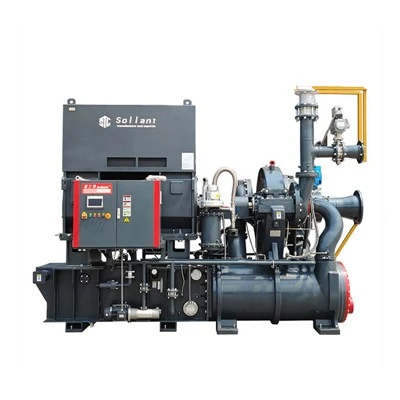
First, let’s start with the core of your specialty gas: its properties. Specialty gases aren’t the same as the compressed air that runs your workshop tools. Some are highly toxic, like arsine or phosphine; others are corrosive, like chlorine or anhydrous ammonia; many are high-purity, often 99.99% or higher, so even tiny amounts of oil or metal shavings can ruin the final product. I once had a customer making semiconductors who installed a standard oil-lubricated reciprocating compressor for their argon supply. Within two weeks, argon purity dropped 0.2%—enough to cause 15% of their wafers to fail. The issue? The oil used for lubrication seeped into the gas stream, a problem that never would have happened if they’d chosen an oil-free or gas-lubricated design upfront.
Beyond purity, consider the gas’s molecular weight and temperature sensitivity. Lighter gases, like hydrogen or helium, leak through microscopic gaps in compressors far easier than heavier gases, and they can experience temperature spikes during compression that degrade if the compressor isn’t designed for fast heat dissipation. Corrosive gases, on the other hand, eat away at standard steel cylinders and compressor internals. For chlorine applications, we always recommend compressors lined with Hastelloy or PTFE coating—standard steel would corrode in months, leading to leaks and safety hazards. If your gas is toxic, you can’t afford those leaks: not just for regulatory compliance, but for the safety of your team. That’s why gas containment design isn’t a “nice to have”—it’s non-negotiable.
Next, operational requirements: how much gas do you need, and how consistently do you need it delivered? This isn’t just about flow rate, measured in cubic feet per minute (CFM) or liters per minute (LPM). It’s about your duty cycle. Do you need the compressor to run 24/7, like a hospital’s medical oxygen supply? Or is it for batch processes, where it only runs for a few hours a week, like aerospace nitrogen testing? For continuous duty, I always advise customers to look for compressors with heavy-duty, industrial-grade components—things like oversized crankshafts, reinforced piston rods, and high-temperature seals. These parts cost a bit more upfront, but they avoid the downtime and replacement costs that come with underbuilt units.
Pressure requirements are another make-or-break factor. Specialty gas applications often need pressures far higher than standard air compressors. Semiconductor manufacturing, for example, may require 3,000 PSI or higher for high-purity gas delivery, while small-scale lab use might only need 100 PSI. I’ve seen customers try to stretch a low-pressure compressor to reach high PSI, and it never ends well: the compressor has to work harder, leading to faster wear, higher energy bills, and higher risk of failure. Always confirm your required discharge pressure, and build in a small buffer—maybe 10-15% above your minimum need—to account for process fluctuations, like when a line is temporarily closed or a downstream filter adds backpressure.
Then there’s purity, which we touched on earlier, but it deserves its own section because it’s the biggest differentiator between specialty gas compressors and general-purpose units. Most general-purpose air compressors use oil for lubrication, which leaves residue in the gas stream. Even a tiny amount of oil contamination can ruin high-purity gases: for medical gases, oil can introduce pathogens; for semiconductor gases, it can leave defects that destroy expensive wafers. If you’re handling ultra-high-purity (UHP) gases, you need a compressor that’s designed for gas-lubricated bearings or hermetic sealing, with no contact between moving parts and lubricants. We also use electropolished internal components and all-metal seals on our UHP units, eliminating any chance of organic contamination. For less strict applications, like industrial shielding gas for welding, an oil-less reciprocating compressor might be sufficient, but never skip checking compatibility with your gas’s purity requirements.
Regulatory and safety standards are non-negotiable, too. Different industries have specific rules about gas handling and equipment. The medical industry, for example, must comply with ISO 13485 for device manufacturing, while semiconductor and aerospace industries follow SEMI standards for gas purity. For toxic gases, you might need compressors with secondary containment systems, gas detectors integrated into the unit, and explosion-proof electrical components. I once had a customer in the chemical industry who skipped explosion-proof ratings for their ammonia compressor—they got a $15,000 OSHA fine and a temporary shutdown after a small leak almost ignited. Don’t make that mistake: always make sure any compressor you choose meets the standards specific to your region and industry.
Total cost of ownership (TCO) is something many customers overlook when choosing a compressor. It’s easy to compare upfront prices, but a cheap compressor will cost you more in the long run. Think about energy efficiency—oil-free compressors might have a slightly higher upfront cost, but they use less energy than oil-lubricated units because they don’t have to overcome friction from the oil. Maintenance costs matter too: some compressors require frequent seal replacements or filter changes, while others are designed for low-maintenance operation. Downtime is another big cost: if your compressor goes down, you might have to shut down an entire production line, which can cost tens of thousands of dollars per hour. At the end of the day, a $20,000 compressor that lasts 10 years with minimal downtime is a better investment than a $10,000 unit that needs to be replaced every 3 years.
Special use cases have their own unique considerations. If you’re moving rare gases, like neon or krypton, which are expensive and in short supply, you need a compressor with extremely low leakage rates. Even a 1% leak per day can add up to thousands of dollars in lost gas over a month. For hydrogen fueling stations, you need compressors that can handle hydrogen’s high diffusivity and explosive properties, with specialized materials to prevent embrittlement. For cryogenic gases, like liquid nitrogen or oxygen, you need compressors that can handle the low-temperature properties of the gas, with insulation to prevent evaporation.
I can’t tell you how many times I’ve walked a customer through these factors only to realize they were fixated on a single feature, like price, instead of the whole picture. Let me share a recent example: a customer running medical oxygen production for a network of clinics came to me looking for a cheap oil-lubricated compressor. They thought they could use it because medical oxygen is just “oxygen,” but that unit would have left oil residue in the gas, which would have violated FDA standards and put their patients at risk. We worked with them to design a custom oil-free scroll compressor, sized for their 24/7 duty cycle, with safety sensors and compliance with ISO 13485. It cost 20% more upfront, but they’ve had zero purity issues in the 18 months since installation, and their energy use is 15% lower than their old oil-lubricated unit.
At the end of the day, choosing the right specialty gas compressor isn’t a one-size-fits-all decision. It’s a combination of understanding your gas’s properties, your operational needs, purity requirements, safety standards, and long-term costs. If you’re not sure where to start, don’t guess. Reach out to a supplier that specializes in specialty gas compressors, like the team I work with. We’ll walk you through your application, ask the right questions, and help you pick a compressor that works for your specific needs, not a generic option that could lead to headaches down the line. Don’t let a wrong compressor derail your process, compromise product quality, or put your team at risk—take the time to choose right, and you’ll reap the benefits for years.

If you’re ready to discuss your specialty gas compressor needs or learn more about our tailored solutions, we’re here to help with your application’s specific requirements. Get in touch with our team to start a conversation about how we can support your operations.
High Pressure Breathing Air Compressor References
- “Specialty Gas Compressors: Selection and Application Guide,” Compressed Gas Association, 2021
- “Purity Standards for Specialty Gases,” SEMI International, 2022
- “Safety Guidelines for Compressor Selection for Toxic and Corrosive Gases,” Occupational Safety and Health Administration (OSHA), 2020
- “Total Cost of Ownership for Industrial Compressors,” International Society of Automation, 2021
Shanghai Sollant Energy Saving Technology Co., Ltd.
As one of the most professional specialty gas compressor manufacturers and suppliers in China, we’re featured by quality products and good service. Please rest assured to buy bulk durable specialty gas compressor from our factory. Welcome to view our website for more information.
Address: No.215, Songri Center, Beihongqiao, Jiading District, Shanghai, China.
E-mail: info3@sollant.com
WebSite: https://www.sollant-gas.com/
