In the realm of transportation and logistics, trailers play an indispensable role. As a seasoned flatbed trailer supplier, I’ve witnessed firsthand the diverse needs of customers and the crucial role that different trailer types play in meeting those requirements. Two commonly used trailers are flatbed trailers and tilt-bed trailers. While they may seem similar at first glance, they have distinct features, advantages, and applications. In this blog, I’ll delve into the key differences between these two types of trailers to help you make an informed decision when choosing the right one for your hauling needs. Flatbed Trailer
Structural Design
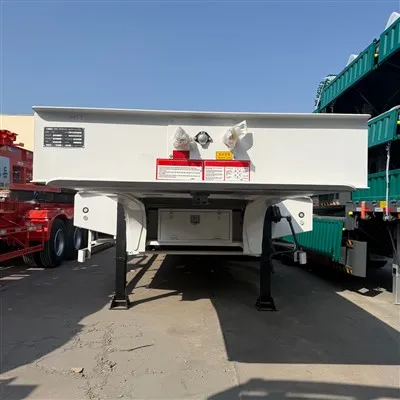
The most obvious difference between flatbed trailers and tilt-bed trailers lies in their structural design. A flatbed trailer, as the name suggests, has a flat, open deck with no sides or roof. This design provides a large, unobstructed surface area, making it ideal for transporting oversized, irregularly shaped, or bulky items. The flat deck allows for easy loading and unloading from any side, using equipment such as cranes, forklifts, or even manual labor.
On the other hand, a tilt-bed trailer has a deck that can be tilted to facilitate loading and unloading. The tilt mechanism can be either hydraulic or mechanical, and it allows the trailer to be lowered to the ground at an angle. This makes it easier to drive vehicles, machinery, or other self-propelled equipment onto the trailer. Once loaded, the deck is raised back to a horizontal position for transportation.
Loading and Unloading
Loading and unloading are critical operations in the transportation process, and the design of the trailer significantly impacts these tasks. Flatbed trailers offer great flexibility in terms of loading methods. They can accommodate a wide range of cargo, including heavy machinery, construction materials, steel coils, and even vehicles. Since there are no sides or roof, the cargo can be placed on the deck using various equipment, depending on its weight and size. For example, large industrial equipment can be lifted onto the flatbed using a crane, while smaller items can be loaded using a forklift.
Tilt-bed trailers, however, are specifically designed for easy loading of self-propelled vehicles and equipment. The ability to tilt the deck eliminates the need for ramps or other loading aids, making the process quicker and more efficient. This is particularly advantageous when transporting multiple vehicles or machinery that need to be loaded and unloaded frequently. For instance, a car dealership may use a tilt-bed trailer to transport new cars from the factory to the showroom, as it allows for a seamless loading and unloading process.
Cargo Types
The type of cargo you need to transport is a crucial factor in determining whether a flatbed trailer or a tilt-bed trailer is the right choice. Flatbed trailers are highly versatile and can handle a wide variety of cargo types. They are commonly used in industries such as construction, agriculture, manufacturing, and transportation. Some of the typical cargo that can be transported on a flatbed trailer includes:
- Construction Materials: Lumber, steel beams, concrete blocks, and other building materials can be easily loaded onto a flatbed trailer and transported to construction sites.
- Heavy Machinery: Excavators, bulldozers, forklifts, and other large pieces of machinery can be safely transported on a flatbed trailer using appropriate securing methods.
- Vehicles: Cars, trucks, motorcycles, and other vehicles can be loaded onto a flatbed trailer for transportation, especially when they are inoperable or need to be moved over long distances.
- Industrial Equipment: Generators, boilers, tanks, and other industrial equipment can be transported on a flatbed trailer, provided that they are properly secured and within the trailer’s weight capacity.
Tilt-bed trailers, on the other hand, are more specialized and are best suited for transporting self-propelled vehicles and equipment. They are commonly used in the automotive industry, equipment rental companies, and salvage yards. Some of the typical cargo that can be transported on a tilt-bed trailer includes:
- Cars and Trucks: New cars, used cars, and trucks can be easily loaded onto a tilt-bed trailer and transported to dealerships, auctions, or repair shops.
- Motorcycles and ATVs: These smaller vehicles can be driven onto a tilt-bed trailer without the need for a ramp, making the loading and unloading process quick and easy.
- Small Equipment: Lawn mowers, tractors, and other small pieces of equipment can be loaded onto a tilt-bed trailer for transportation to job sites or storage facilities.
Safety Considerations
Safety is of utmost importance when transporting cargo, and both flatbed trailers and tilt-bed trailers have their own safety considerations. When using a flatbed trailer, it is crucial to ensure that the cargo is properly secured to prevent it from shifting or falling during transit. This can be achieved using tie-down straps, chains, and other securing devices. Additionally, the weight of the cargo must be evenly distributed across the trailer to prevent overloading and ensure stability.
Tilt-bed trailers also require careful safety measures. The tilt mechanism must be inspected regularly to ensure that it is in good working condition and can handle the weight of the cargo. When loading and unloading, it is important to follow the manufacturer’s instructions and use appropriate safety equipment, such as wheel chocks and safety barriers. Additionally, the trailer must be parked on a level surface to prevent it from tipping over during the tilting process.
Cost and Maintenance
The cost and maintenance requirements of flatbed trailers and tilt-bed trailers can vary depending on several factors, such as the size, capacity, and features of the trailer. Generally, flatbed trailers are more affordable than tilt-bed trailers, as they have a simpler design and fewer components. However, the cost of a flatbed trailer can increase significantly if it is equipped with additional features, such as hydraulic systems, adjustable decks, or specialized tie-downs.
In terms of maintenance, flatbed trailers are relatively easy to maintain, as they have fewer moving parts. Regular inspections and lubrication of the axles, wheels, and tie-downs are usually sufficient to keep the trailer in good working condition. Tilt-bed trailers, on the other hand, require more maintenance due to the complexity of the tilt mechanism. The hydraulic system, in particular, needs to be inspected and serviced regularly to ensure proper operation and prevent leaks.
Conclusion
In conclusion, flatbed trailers and tilt-bed trailers are two distinct types of trailers with their own unique features, advantages, and applications. Flatbed trailers are highly versatile and can handle a wide variety of cargo types, while tilt-bed trailers are specialized for easy loading and unloading of self-propelled vehicles and equipment. When choosing between the two, it is important to consider factors such as the type of cargo you need to transport, the loading and unloading methods, safety requirements, cost, and maintenance.
As a flatbed trailer supplier, I understand the importance of providing high-quality trailers that meet the specific needs of our customers. Whether you need a flatbed trailer for transporting construction materials, heavy machinery, or vehicles, or a tilt-bed trailer for easy loading of self-propelled equipment, I can offer you a wide range of options to choose from. Our trailers are built to last, with durable materials and advanced features that ensure reliability and safety.
Trucks If you’re in the market for a trailer and need more information or guidance, please don’t hesitate to contact me. I’d be happy to discuss your requirements and help you find the perfect trailer for your hauling needs. Let’s work together to ensure that your transportation operations run smoothly and efficiently.
References
- "Trailer Basics: Flatbed vs. Tilt-Bed." TruckingInfo.com.
- "Choosing the Right Trailer for Your Business." EquipmentWorld.com.
- "Safety Tips for Flatbed and Tilt-Bed Trailers." DOT.gov.
Shandong Huayuanda Automobile Manufacturing Co., Ltd.
As one of the most experienced flatbed trailer manufacturers and suppliers in China, our products have good reputation in the market. We warmly welcome you to buy high quality flatbed trailer at low price from our factory. If you have any enquiry about cooperation, please feel free to email us.
Address: Industrial Park, Quanpu Town, Liangshan County, Jining City, Shandong Province
E-mail: Huayuanda2024@163.com
WebSite: https://www.hydtrailer.com/
