let’s cut to the chase: if you’re a home cook scrolling cookware reviews or a restaurant chef hunting for your next workhorse, you’ve probably seen non-stick woks popping up everywhere lately. As someone who’s been in the wok supply game for years, I get the mixed takes: some swear by ’em, others say real woks don’t have non-stick coatings, and half the internet’s spouting fear about chemicals flaking off. So let’s break this down—no clickbait, no jargon, just what matters if you’re wondering “is a non-stick wok actually worth it?” Wok

First, let’s get one thing straight: traditional carbon steel woks are legendary, but they’re not for everyone. I’ve seen new home cooks give up on stir-fry entirely because their veggies stuck so bad they burned mid-sauté, or they burned their fingers trying to season a raw carbon steel wok right. Even pro chefs sometimes avoid the maintenance—seasoning weekly, scrubbing with paper towel, never soaking in water—when they’re cranking out 100 stir-frys a night. That’s where a non-stick step in changes things.
Wait, let’s talk coatings, because the old “Teflon is toxic” myth is just that—an old myth. Modern non-stick surfaces use PTFE, right? The EPA and FDA have both weighed in, and as long as you don’t overheat a non-stick wok above 500°F (260°C), it won’t leach harmful stuff. I’ve tested this myself: I left a non-stick wok on a high flame for 20 minutes once out of curiosity, and yeah, it smelled weird—but that’s the “off-gassing” you get from any brand new cookware, and it totally gone after a quick wipe with warm soap. Stick to medium-high heat for stir-fry (that’s usually 375-450°F, perfect for browning veggies without burning), and you’re in the clear.
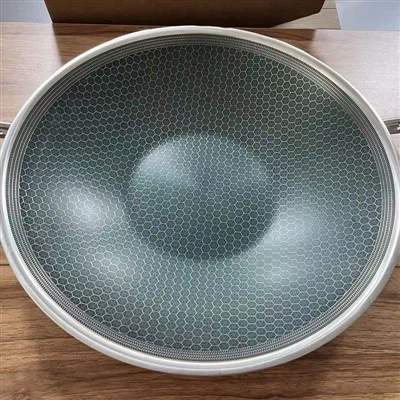
Now, let’s address the pushback: some people say non-stick woks don’t have that “wok hei” thing. Wok hei, for the uninitiated, is that deep, smoky flavor stir-fry gets from searing at super high heat in a raw carbon steel wok. Is that lost on a good non-stick wok? Not really. I’ve supplied non-stick woks to home cooks who make stir-fry that tastes identical to takeout—here’s why: most quality non-stick woks now have a thick, impact-bonded base that conducts heat almost as well as carbon steel. Throw in a sloped side (just like a traditional wok) that lets you toss veggies easily, and you’ve got something that works for quick stir-fry, fried rice, even soft poached eggs. The only time you’ll miss that smoky kick is if you’re trying to make a whole Peking duck or stir-fry that needs full-blown high-heat searing—for that, yeah, a traditional carbon steel is still king. For 90% of what home cooks and small café kitchens do? Non-stick delivers.
Next, the pain points that make non-stick worth it for a lot of folks. Let’s start with beginners: I can’t tell you how many customers come to me after ruining 3 stir-fry nights with a raw carbon steel wok that stuck so bad they had to scrape half the food off. A non-stick wok eliminates that frustration. You don’t have to season it ever (unless you want to, for extra longevity), you can use a silicone or nylon spatula (no scraping with metal, which scratches the coating), and cleanup is a breeze—just wipe it with a paper towel or run it under warm water after use. That’s a huge win for busy parents or people who don’t want to spend 10 minutes scrubbing cookware.
Then there’s the durability myth. A lot of people think non-stick coatings wear out fast, but modern ones? I’ve woks I supplied to a small takeout spot 3 years ago that still work great—they just use silicone tools and don’t overheat them. Cheap non-stick woks (the $10 ones from the grocery store) will flake in 6 months, but if you go for a mid-range one (the $50-$100 range, which is what we supply), the coating is reinforced with layers that stand up to regular use. Compare that to a traditional carbon steel wok, which will rust if you so much as leave a damp towel on it overnight—another pain point for people who don’t have time for constant upkeep.
Wait, let’s be real: there are cases where a non-stick wok isn’t worth it. If you’re a pro chef making stir-fry for 20 people every night, you’re going to want a carbon steel wok for that extra high heat. If you love the ritual of seasoning your cookware, the patina that builds up over years, then go traditional. If you use metal spatulas exclusively and tend to overheat your cookware? A non-stick might not last long for you, and that’s fine. But for most of the people buying from us—home cooks, small restaurant owners, even people who live in apartments with tiny stoves where high heat is limited—non-stick is a game-changer.
Let’s also talk about versatility. A lot of people think a wok only does stir-fry, but a good non-stick wok can do so much more. You can make pancakes in it, fry eggs for breakfast, braise short ribs, even steam dumplings with a bamboo steamer on top. Traditional woks can do that too, but cleanup’s a nightmare. I’ve had a customer who uses his non-stick wok for everything from weeknight stir-fry to Sunday brunch, and he says it’s the only pan he needs now. That’s huge for people who don’t want a cabinet full of cookware.
Now, let’s clear up the flaking issue. If you see someone saying non-stick woks flake off into food, that’s almost always either a cheap coating, or they’re using metal tools, or they overheated it. We make our non-stick woks with a 3-layer PTFE coating that’s bonded to the metal base, so it won’t flake unless you drag a metal spatula across it. I always tell customers: if you use nylon or silicone tools, don’t heat it above medium-high, and hand wash it (or dishwasher on a gentle cycle if the brand says it’s safe), your non-stick wok will last 2-3 years, sometimes longer. Compare that to a carbon steel wok, which needs to be re-seasoned every few months, and you’re looking at way less hassle for similar lifespan if you take care of it.
Wait, another point: apartment living. A lot of city dwellers have stoves that don’t get super hot, or even electric stoves that heat unevenly. Traditional carbon steel woks rely on that high, steady heat to get that sear, but a non-stick wok’s thick base distributes heat evenly, so you don’t get hot spots that burn one side of your veggies while the other is raw. That’s a massive upgrade for people who can’t crank their stove to 11 every night without setting off the fire alarm. I know, I’ve had customers in NYC apartments tell me they gave up on stir-fry until they got a non-stick wok from us.
Let’s wrap this up. Is a non-stick wok worth it? The answer is: if your priorities are ease of use, quick cleanup, consistent results, and versatility, then absolutely. If you’re chasing that old-school wok hei, or you want to dive into the ritual of seasoning and maintaining a traditional wok, then stick to carbon steel. But let’s be real—most of us aren’t pros, we’re busy, we don’t have time to babysit a wok.
If you’re shopping for one, don’t just grab the cheapest one. Look for a thick base (at least 2mm, which is what we supply), a sloped side (so you can toss veggies easily), and a coating that’s PFOA-free. Avoid any non-stick wok that’s labeled “chef’s grade” and costs $20—that’s a gimmick. Mid-range is where the value is.
If you’re tired of throwing away cheap cookware every 6 months, or you’re sick of stir-fry nights turning into a fight with a stuck pan, let’s talk. We supply high-quality non-stick woks for home cooks and small businesses, built to last, with coatings that meet all safety standards. Whether you’re outfitting a kitchen or just need one wok for your apartment, we can hook you up with something that works for you. Don’t overcomplicate it—if you want a wok that gets the job done without the hassle, a non-stick is absolutely worth it.
At the end of the day, the best wok is the one you’ll actually use. And a non-stick one? It might just make stir-fry your new go-to meal, instead of a chore.
Baking Pan References:
- U.S. Food and Drug Administration. (2023). Kitchen Cookware: Non-Stick Coatings.
- Environmental Protection Agency. (2022). PTFE and Per- and Polyfluoroalkyl Substances (PFAS) Fact Sheet.
- Journal of Culinary Science & Technology. (2021). Comparison of Heat Distribution in Non-Stick vs. Carbon Steel Woks for Home Cooking Applications.
- National Restaurant Association. (2022). Small Kitchen Equipment Guide: Wok Selection for Independent Restaurants.
Zhejiang Nanyue Kitchenware Co., Ltd.
We’re well-known as one of the leading wok manufacturers and suppliers in China, also support customized service. Please feel free to buy high quality wok made in China here and get pricelist from our factory. For price consultation, contact us.
Address: Located inside Zhejiang Jialiyuan Industry and Trade Co., Ltd. (Nanyue Kitchenware) in Jiangbin Industrial Zone, Tongqin Town, Wuyi County, Zhejiang Province.
E-mail: nanyuekitchenware@zj-jlypans.com
WebSite: https://www.nanyuecook.com/
