Hey there, if you’re working with liquid level monitoring—whether it’s for industrial tanks, food and beverage processing, or even lab equipment—you know how critical it is to get clear, reliable data fast. As someone who supplies optical level sensors for a living, I run into this question all the time: “What output signals do these things actually put out?” It’s not just a random detail—getting the right signal for your setup means the difference between a system that runs like a well-oiled machine and one that’s causing headaches at 2 a.m. when a tank overflows. Let’s break this down like we’re chatting over a coffee, no super jargon (okay, maybe a little, but I’ll explain it). Optical Level Sensor
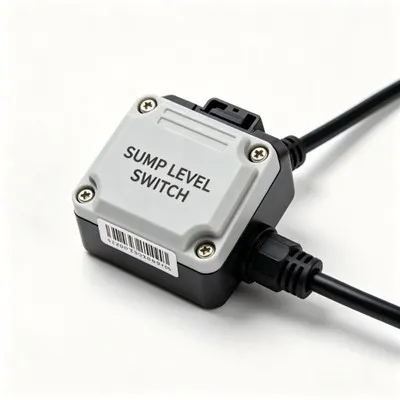
First off, let’s keep it simple: optical level sensors work by using light, usually an LED beam and a photodetector. When light hits a liquid surface vs. air, it reflects or refracts differently—so the sensor “sees” whether there’s liquid where it’s mounted. But what happens next is where the output signal comes in. That’s how the sensor communicates that level info to your PLC, controller, or monitoring system. And yeah, I’ve seen way too many people pick a sensor just based on the light tech, only to realize they didn’t check if the signal plays nice with their existing gear. That’s a miss, so let’s cover the main ones we supply, no fluff.
The most common one you’ll run into is digital output. Let’s split that into two types because they’re not the same: discrete (or on/off) digital, and PWM (pulse-width modulation) digital. Discrete is the basics—this is the “is it full or empty?” signal. Think of it like a light switch: the sensor sends a high signal (usually 5V or 24V, depending on your power setup) when it detects liquid, and a low signal when it doesn’t. Or vice versa, depending on how you wire it. For a lot of small tanks, like in a brewery’s fermenter, that’s all you need—you just want an alert when the liquid hits a certain spot, so the pump turns on or off. We sell a ton of these for that exact use case; they’re cheap, easy to install, and no need for extra processing.
Then PWM digital is a step up. Instead of just on/off, it sends a square wave where the length of the pulse (the width) changes based on the liquid level. Higher liquid level = wider pulse, lower = narrower. This isn’t just a binary yes/no—it gives you a rough analog-like reading without having to handle an actual analog signal. It’s great for systems where you need to track how full a tank is over time, like a chemical storage tank where you can’t just rely on two trigger points. I remember a customer who used our PWM optical sensor for their rainwater harvesting system; they programmed a controller to read the pulse width, so it automatically routed water to different tanks depending on how full each was. Saved them so much manual checking, they called it a game-changer.
Next up, analog output—this is the one that’s like a slow, steady signal that’s proportional to level. The two big ones here are 4-20 mA current loop and 0-10V DC voltage. Let’s talk 4-20 mA first because it’s the workhorse for industrial stuff. The beauty of current is that it’s not affected by wire length or electrical noise, which is huge when you’re running wires 100+ feet across a plant. 4 mA is usually “empty” and 20 mA is “full”—so if your sensor sends 12 mA, that’s exactly halfway. No conversion needed, your controller can read that directly. We use this for most of our industrial-grade optical sensors; oil refineries, wastewater treatment plants, even pharmaceutical companies swear by it because it’s consistent. I had a customer in the food industry who switched from ultrasonic sensors to our 4-20 mA optical ones because the ultrasonic kept messing up with foam from mixing; the optical got a clear light reflection, and the 4-20 signal stayed rock solid no matter the foam.
0-10V DC is simpler for smaller setups, like lab equipment or small process tanks. Here, 0V is empty and 10V is full. It’s easier to wire than 4-20 mA (no extra current loop wiring needed) but it’s more prone to noise over long distances, so it’s best for setups under 50 feet. We keep a lot of these in stock for universities that need level sensors in their lab bioreactors—their small systems don’t need the extra noise protection, and the voltage signal works right with their small controllers.
Wait, are there other outputs? Yeah, I’ve seen some specialty ones, like IO-Link. That’s a newer digital standard that’s super handy for Industry 4.0 setups. It doesn’t just send on/off or level info—it can send diagnostic data, like if the LED is dying, or if there’s dust blocking the lens, or how many cycles the sensor has run. That’s massive for predictive maintenance—you don’t wait for the sensor to fail, you get a heads up it’s time to replace it. We’ve had a couple of manufacturing clients adopt these for their assembly line tank systems; they’ve cut unplanned downtime by almost 30% just from using the diagnostic data from the IO-Link output.
Now, let’s be real—why does this matter for you, not just tech specs? If you pick a sensor with a 4-20 mA output but your controller only takes 0-10V, you’re gonna waste time and money trying to add a converter. If you need to monitor 10 different tanks from a central screen, a discrete sensor won’t give you enough data to show each tank’s level, just when it hits a threshold. I’ve had so many people come to me saying they had a bad experience with optical sensors, and 9 times out of 10 it’s because they grabbed the wrong output for their setup. Like that one guy who tried to use a discrete output sensor for his 500-gallon diesel tank—he only knew if it was above or below a set point, not how much fuel he actually had. He switched to our 4-20 mA model and hasn’t looked back.
Also, let’s not forget to mention that a lot of our sensors are configurable—you can switch between outputs, or adjust the sensitivity, right from the controller or a little app. That’s a big plus when your needs change later. Maybe you start with a discrete output for a small tank, then expand to a larger system that needs analog—you don’t have to replace the whole sensor, just tweak the settings. We do that on most of our mid-range optical level sensors, which is why a lot of repeat customers come back.
Wait, should I touch on how the output ties to the sensor’s other features? Like, if you’re dealing with liquids that have foam, high viscosity, or are translucent, the optical sensor’s light type (infrared vs. visible red) will affect the signal, but the output signal still follows the same main types. We make sensors with both infrared (better for opaque liquids, less visible to passersby) and visible red (cheaper, good for clear liquids), but the output—digital, PWM, 4-20, 0-10V—stays consistent. That’s one less thing to worry about when choosing.
Now, if you’re in the market for an optical level sensor, don’t overcomplicate it. First, figure out two things: 1) do you just need to know when liquid is at a certain point, or do you need a continuous level reading? 2) how far is the sensor from your controller, and what type of signals does your controller already use? If it’s just on/off, discrete is fine. If continuous, go for 4-20 mA for long wires, 0-10V for short. If you want smart diagnostics, IO-Link is worth the extra buck.
We supply all of these—from basic discrete sensors for small DIY projects up to industrial-grade 4-20 mA and IO-Link ones for big factories. If you’re stuck on what’s right for your setup, reach out to us and we can walk through it no problem. No sales pitch pressure, just actual advice from people who install these every day. That’s the thing about working with a supplier that’s hands-on—we don’t just sell parts, we know how they work in real situations.
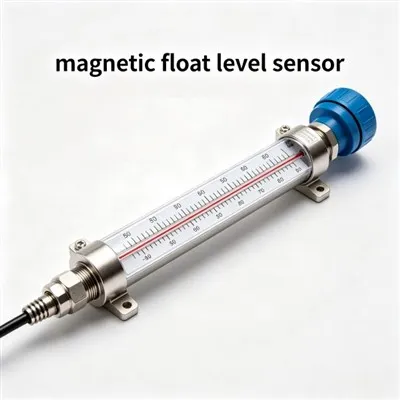
Now, a quick note to wrap up: optical level sensors are awesome because they’re non-contact (most of them, anyway—wait, no, the ones we supply are usually mounted on the outside of the tank or dipped in, but no moving parts so no wear), so they last longer than float sensors or ultrasonic ones in harsh environments. But the output signal is what makes them work with your system. Don’t sleep on that detail.
Float Level Sensor If you’re ready to pick a sensor or want to chat through your specific needs, get in touch to discuss. We’ll make sure you get the right output signal and the right sensor for your use case.
References
- Fraden, J. (2016). Handbook of Modern Sensors: Physics, Designs, and Applications. Springer.
- International Electrotechnical Commission (IEC). (2020). IEC 61508: Functional Safety of Electrical/Electronic/Programmable Electronic Safety-related Systems.
- Optek Technology. (2022). Optical Level Sensor Application Guide. Littelfuse, Inc.
- Industry 4.0 Initiatives. (2021). IO-Link Standard for Smart Sensor Communication. International Society of Automation (ISA).
Shenzhen Fineherc Technology Co., Ltd.
As one of the most experienced optical level sensor suppliers in China, we’re featured by quality products and low price. Please feel free to buy discount optical level sensor made in China here from our factory. Welcome to view our website for more information.
Address: 5th Floor, Building D, No. 39, Keji East Road, Torch Development Zone, Zhongshan City,China
E-mail: fineherc@hotmail.com
WebSite: https://www.fineherc.com/
