As a provider of solid woven conveyor belts, I often receive inquiries from clients about the various performance characteristics of our products. One question that stands out is whether solid woven conveyor belts are resistant to UV rays. This topic is particularly crucial for industries where conveyor belts are exposed to sunlight for extended periods, such as mining operations in open – pit mines, agricultural processing in outdoor facilities, and some construction sites. Solid Woven Conveyor Belt
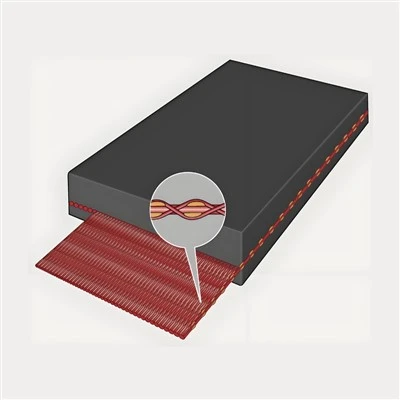
Understanding the Basics of Solid Woven Conveyor Belts
First, let’s briefly understand what solid woven conveyor belts are. These belts are constructed with a unique weaving process that creates a monolithic structure. The warp and weft threads interlock tightly, forming a robust and uniform fabric core. This core is then usually coated with rubber or other polymeric materials to enhance its durability, flexibility, and resistance to abrasion, impact, and chemicals.
The popularity of solid woven conveyor belts lies in their high strength – to – weight ratio, excellent troughability (the ability to form a trough shape for efficient material handling), and long – term reliability. They are widely used in transporting a wide range of materials, from light and fine powders to heavy and bulky aggregates.
The Impact of UV Rays on Conveyor Belts
Ultraviolet (UV) rays are a part of the electromagnetic spectrum with wavelengths shorter than visible light. When conveyor belts are exposed to sunlight, the UV rays can cause several types of damage.
One of the primary effects is the degradation of the polymer materials. For the rubber coatings on solid woven conveyor belts, UV rays can break the chemical bonds in the rubber molecules. This leads to a process called photo – oxidation, where the rubber becomes more brittle and loses its elasticity. As a result, the belt may crack, especially under stress from normal operation. Cracks not only reduce the belt’s strength but also provide entry points for moisture and other contaminants, which can further accelerate the deterioration process.
In addition, UV exposure can also cause color fading of the conveyor belt. While color fading may seem like a cosmetic issue, it can sometimes be an indication of more profound chemical changes within the material. Faded areas may have different mechanical properties compared to the original parts, potentially leading to uneven wear and reduced overall performance.
Resistance Features of Solid Woven Conveyor Belts to UV Rays
When it comes to the resistance of solid woven conveyor belts to UV rays, several factors come into play.
Material Selection
The choice of materials for the core and the coating is crucial. For the fabric core, some synthetic fibers, such as polyester, have a certain degree of natural UV resistance. Polyester fibers can withstand UV exposure better than many other organic fibers. When it comes to the coating material, specific types of rubber or polymers are formulated to be more resistant to UV rays. For example, some EPDM (ethylene – propylene – diene monomer) rubbers have excellent resistance to sunlight and ozone, which makes them suitable for outdoor applications where UV exposure is a concern.
Protective Additives
Manufacturers often incorporate protective additives into the coating material to enhance UV resistance. These additives can act as UV absorbers or stabilizers. UV absorbers work by absorbing the UV rays and converting the absorbed energy into heat, which is then dissipated. This prevents the UV rays from directly attacking the polymer molecules in the rubber. Stabilizers, on the other hand, can react with the free radicals generated during photo – oxidation and neutralize them, thus slowing down the degradation process.
Special Coatings and Treatments
Some solid woven conveyor belts are provided with special coatings or treatments to boost their UV resistance. For instance, a thin layer of a highly UV – resistant polymer can be applied on the surface of the belt. This additional layer acts as a shield, absorbing and reflecting most of the UV rays before they reach the main belt material. Some treatments may also involve surface – modification processes, such as electron – beam or plasma treatment, which can change the surface properties of the belt to improve its resistance to UV damage.
Testing and Certification of UV Resistance
We, as a supplier of solid woven conveyor belts, take the issue of UV resistance very seriously. Our products undergo strict testing procedures to ensure their performance in UV – exposed environments.
One common testing method is the accelerated weathering test. In this test, samples of the conveyor belt are placed in a special chamber where they are exposed to high – intensity UV light along with controlled temperature and humidity conditions. The exposure time in the chamber is much shorter than the actual service life, but it can simulate years of outdoor exposure. By monitoring the changes in physical properties such as tensile strength, elongation at break, and hardness of the samples over time, we can accurately assess the belt’s UV resistance.
In addition, we also seek relevant certifications for our products. Certifications from international standards organizations, such as ISO 14577 for mechanical properties and ISO 4649 for abrasion resistance, also often include requirements for UV resistance. Having these certifications not only demonstrates our commitment to quality but also gives our clients confidence in the performance of our solid woven conveyor belts in UV – prone applications.
Real – World Applications and Case Studies
Let’s look at some real – world examples to illustrate the importance of UV – resistant solid woven conveyor belts.
In an open – pit coal mine, conveyor belts are constantly exposed to sunlight throughout the year. The use of UV – resistant solid woven conveyor belts has significantly extended the service life of the belts. Before switching to our UV – resistant belts, the mine operators had to replace the conveyor belts every six to eight months due to severe cracking and loss of strength caused by UV exposure. After adopting our products, the replacement interval has been extended to over a year, resulting in substantial cost savings in terms of belt replacement and maintenance.
In the agricultural sector, conveyor belts are used in outdoor grain storage and processing facilities. These belts are exposed to sunlight, rain, and temperature variations. UV – resistant solid woven conveyor belts have proven to be more reliable in this environment. They can maintain their flexibility and strength, ensuring the smooth and efficient transport of grains. This reduces the risk of downtime due to belt failures and improves overall productivity.
Conclusion and Call to Action
In conclusion, solid woven conveyor belts can indeed be highly resistant to UV rays when proper materials, additives, and manufacturing processes are employed. Our company is committed to providing high – quality solid woven conveyor belts that meet the demanding requirements of various industries, especially those with significant UV exposure.
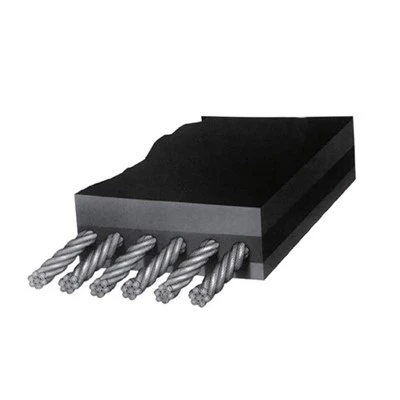
If you are in need of solid woven conveyor belts or have any questions regarding UV resistance or other performance characteristics, we would be more than happy to assist you. Our team of experts can provide you with detailed information, technical support, and customized solutions based on your specific application.
Low Rolling Resistant Conveyor Belt Contact us today to start a discussion about your conveyor belt needs. Let’s work together to find the best conveyor belt solution for your business.
References
- ASTM International. "Standard Practices for Exposing Plastics to Indoor Fluorescent UV Condensation Apparatus". ASTM G154.
- European Committee for Standardization. "Conveyor belts — Antistatic properties — Requirements and test methods". EN 1813.
- Peacock, A. J. "Rubber Technology Handbook". Hanser Publications, 2000.
Alumina Technology (Qingdao) New Materials Co., Ltd.
As one of the most professional solid woven conveyor belt manufacturers and suppliers in China, we also support customized service. With abundant experience, we warmly welcome you to buy solid woven conveyor belt for sale here and get quotation from our factory. For price consultation, contact us.
Address: No.448, Jiangshan South Road, Huangdao District, Qingdao City, Shandong Province
E-mail: Gloria.zhang@contitech.cn
WebSite: https://www.altechconveyorbelt.com/
