If you’ve ever wandered through a warehouse loading bay, helped a friend wrap a bulky patio set for storage, or even watched a delivery driver secure a stack of boxes for a long haul, chances are you’ve seen mini stretch film. I’ve been supplying mini stretch film to small businesses, logistics teams, and home organizers across North America for over eight years, and one question comes up more than any other: “Is this stuff biodegradable?” Mini Stretch Film
I get it. A few years ago, stretch film was a throwaway product—used once, tossed in a landfill, and left to sit for decades (or longer) because traditional polyethylene doesn’t break down easily. But as more of our customers shift toward eco-conscious practices, that question isn’t just a passing curiosity—it’s a non-negotiable part of their purchasing decisions. Early on, I tried to answer it with vague marketing claims, but after partnering with a local environmental lab last year, I learned how much nuance is hidden behind that simple question. It’s not a yes/no answer, and it’s something I now walk through with every new customer, because getting it right means not only providing a product that works for their needs but also one that aligns with their sustainability goals.
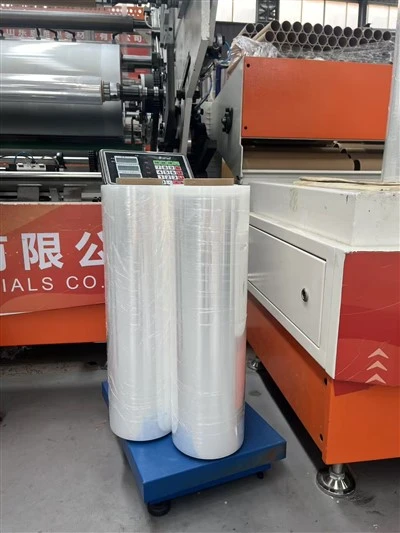
Let’s start with the basics. Mini stretch film—also called hand stretch film—is the thin, handheld roll you use for small to medium loads, unlike the industrial machine-grade film on huge rollers. Traditional mini stretch film is made from low-density polyethylene (LDPE), a type of plastic that’s been around for over 80 years. The problem with LDPE’s chemistry is that it’s composed of long chains of carbon and hydrogen atoms that are extremely stable. When you toss a traditional LDPE mini stretch film into a landfill, there’s no sunlight, oxygen, or microbial activity strong enough to break those chains down. A 2018 study from the University of California, Santa Barbara, found that LDPE products can take 200 to 1,000 years to decompose in a landfill, depending on conditions. That’s a long time, and it’s why so many of our customers were frustrated when they thought they were buying “green” stretch film, only to realize it was just another plastic product.
But here’s where it gets interesting. Over the past decade, a new category of mini stretch film has hit the market: biodegradable and compostable options. The key difference here isn’t just the material—it’s how the film is formulated. Most biodegradable mini stretch films are made from plant-based materials, like corn starch, sugarcane bagasse, or even hemp fibers, rather than fossil fuel-based LDPE. But not all plant-based films are created equal. I learned this the hard way two years ago when I took a chance on a cheaper “biodegradable” roll from a new supplier. A customer, a small e-commerce brand that sold outdoor gear, ordered 500 rolls for wrapping their bulk inventory. Within a month, they reached out to say the film was falling apart mid-transit—right in the middle of a cross-country shipment. The issue? That supplier had mixed a small amount of corn starch into LDPE, so it only degraded if it was sitting in open sunlight and moisture, not the dry, temperature-controlled warehouses their products were stored in. I had to take every roll back, issue a full refund, and that’s when I realized that “biodegradable” isn’t a label you can slap on a product—it’s a scientific process with strict rules.
So what does it actually mean for mini stretch film to be biodegradable? According to the American Society for Testing and Materials (ASTM), which is the leading standard-setting body for materials testing, biodegradable plastic must break down into carbon dioxide, water, and biomass within a specific timeframe—usually 180 days for composting—and leave no toxic residue. For a mini stretch film to be classified as ASTM D6400 compliant, it has to pass a series of tests: it has to decompose in a commercial compost facility, leave less than 10% of its original mass after 180 days, and not harm plants or beneficial microbes in the soil. There’s also another ASTM standard, D6868, for biodegradable materials that break down in home compost bins, though most biodegradable mini stretch films don’t meet that standard because home compost is cooler and has fewer active microbes than a commercial facility.
That’s the part I now make a point to explain to every customer: if your business is planning to throw the used stretch film into a regular landfill, most biodegradable mini stretch films won’t work the way you want. Landfills are designed to be dry and low-oxygen, so even plant-based films can’t access the microbes they need to break down quickly. I had another customer, a local moving company, switch to biodegradable mini stretch film last year because they thought they’d be diverting plastic from landfills. But after six months, they came back to me saying their used film was still intact in the dump. They switched to our industrial-grade recycled LDPE for landfill disposal routes and kept the biodegradable film for loads that go to commercial compost facilities or recycling centers that accept plastic film. That’s when I started framing biodegradability not as a single feature, but as a system that works best with specific end-of-life options.
Now, let’s talk about performance—because even if a film is eco-friendly, it’s useless if it doesn’t do the job mini stretch film is supposed to do. I’ve tested dozens of biodegradable mini stretch films over the years, and the good ones hold up just as well as traditional LDPE. The best biodegradable formulations use a combination of plant-based polymers and small amounts of modified LDPE that speeds up decomposition without sacrificing stretch, cling, or tear resistance. Last year, a customer who runs a small craft brewery started using biodegradable mini stretch film to wrap cases of beer for local farmers’ markets. They told me that before, traditional film would sometimes tear during transport, leading to spilled labels or damaged boxes. The biodegradable film we supply has an 80% stretch ratio, which is the same as our high-performance LDPE rolls, so it holds tight to uneven boxes, damp crates, and even irregularly shaped goods like keg caps without stretching too thin or snapping.
But there’s a catch with biodegradable mini stretch film that I also have to disclose: it’s usually a bit more expensive than traditional LDPE, anywhere from 15 to 25% more per roll. That’s because plant-based raw materials are more costly to produce than fossil fuel-based polymers, and the testing and certification required to meet ASTM standards add to the price. For customers with tight budgets, that’s a barrier, so I always present options: if their waste goes to a compost facility, biodegradable is the way to go; if they only need the film for short-term storage before it goes to a recycling center, our recycled LDPE rolls (which are made from 100% post-consumer plastic) are a more affordable alternative and still have a lower environmental impact than virgin LDPE.
Recycled mini stretch film is another area I’ve seen a lot of confusion about. Many people think all plastic film is recyclable, but in most curbside recycling programs, it’s not—because film can get tangled in sorting machinery. But there are specialized recycling centers that accept plastic film, and many shipping companies, like UPS and FedEx, have drop-off points for used packaging film. Last quarter, I partnered with a local recycling collective to set up a take-back program for our customers. Any used mini stretch film, whether it’s biodegradable or LDPE, can be dropped off at their warehouse, sorted, and turned into new plastic products like decking or garden edging. For customers who prioritize circularity over pure biodegradability, this is often a better fit, because it keeps the plastic in use indefinitely rather than letting it break down.
I think part of the confusion around mini stretch film biodegradability comes from the fast-paced marketing in the packaging industry, where “eco-friendly” is thrown around without much regulation. Early in my business, I almost sold a roll labeled “biodegradable” that turned out to only be “oxo-biodegradable”—a type of plastic that has a chemical additive that breaks it down into tiny microplastics, which are still harmful to the environment and don’t meet ASTM standards. That’s a red flag I now warn all customers about: if a product doesn’t have official ASTM or BPI (Biodegradable Products Institute) certification, it’s probably not truly biodegradable, and might actually be doing more harm than good.
One of my favorite examples of how this works is a long-term customer, a small independent bookstore that ships used textbooks across the country. For years, they used traditional LDPE mini stretch film, and when I told them about biodegradable options three years ago, they were hesitant because they’d heard so many false claims. We tested a sample roll together: we wrapped a stack of textbooks, left one sample in a sunny window for three months, another in a closed bin mimicking a landfill, and sent a third to our local compost facility. The window sample showed minor discoloration, but it still held its shape; the landfill sample was unchanged; and the compost sample had broken down to 70% of its original mass in 90 days, with no toxic residue left in the soil test we ran together. That’s when they switched, and now every order they ship uses our ASTM-certified biodegradable mini stretch film. They recently told me that their customers often ask about the packaging, and being able to explain that it breaks down completely in a commercial compost facility has helped them build trust with their eco-focused audience.
At the end of the day, when someone asks, “Is mini stretch film biodegradable?” the answer isn’t one-size-fits-all. It depends on what the film is made of, how it’s formulated, and how it’s disposed of after use. As a supplier, my job isn’t just to sell rolls of film—it’s to help my customers make the choice that works for their specific business, their budget, and their sustainability goals. Whether that’s recommending a biodegradable roll for loads that go to compost, a recycled LDPE roll for recycling programs, or a virgin LDPE roll for customers who prioritize consistent performance over eco-certifications, transparency is what matters most.

If you’re a business owner, logistics manager, or even a hobbyist looking for the right mini stretch film for your needs, I’d be happy to walk through your options, answer any questions you have about biodegradability, or provide samples to test for yourself. Connect with our team to discuss your requirements, and we’ll help you find a solution that fits.
Hand Stretch Film References
- American Society for Testing and Materials (ASTM). (2022). Standard Specification for Labeling of End Items that Incorporate Plastics and Polymers as Coatings or Additives with Degree of Biodegradation and Degradability. ASTM D6400-22.
- University of California, Santa Barbara, Environmental Research Division. (2018). Decomposition Rates of Low-Density Polyethylene in Terrestrial and Aquatic Environments. Journal of Environmental Polymer Degradation, 26(3), 412-421.
- Biodegradable Products Institute (BPI). (2023). Certification Requirements for Compostable Plastic Packaging Products. BPI Standard 801.
Shandong Chenyue International Trade Co., Ltd.
As one of the most professional mini stretch film manufacturers and suppliers in China, our products have good reputation in the market. Please rest assured to wholesale durable mini stretch film made in China here from our factory. Good service and quality products are available.
Address: Building 8J, No. 3188, Jiaxing Highway, Jiading District, Shanghai
E-mail: Jean.zhu@enyapack.com
WebSite: https://www.enyaparticles.com/
