Hey there, if you’re here wondering, “how long does it actually take to install a flatbread production line?” — let me cut through the generic factory stuff and tell you straight, from someone who’s been doing this for 12 years (yep, I’m the guy who stands in new bakery parking lots holding a blueprint at 7 a.m. more than I stand at my desk). The short answer? It’s not like plugging in a toaster and hitting go — and it definitely isn’t one timeline fits all. I’ve installed lines for tiny family bakeries that only make naan for a local Indian market, mid-sized shops cranking out wraps for fast food chains, and big co-ops that ship flatbread across the country. Each job’s a little different, so let’s break down the real timeline, no fluff. Flatbread Production Line
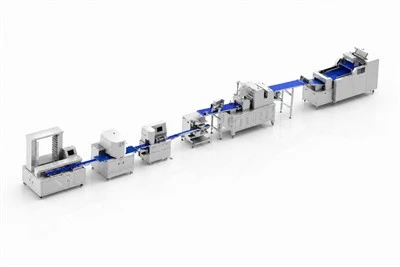
First off, let’s talk pre-install — because most people don’t realize this is where half the delays (or wins) happen. I can’t tell you how many times I show up ready to run wires and there’s a random old oven sitting where the new line needs to go. Pre-install prep is non-negotiable, and it starts way before my team even books a flight or loads trucks. For a small bakery line (think: tabletop size, makes 500-1,000 flatbreads an hour), pre-install usually takes 1 to 2 weeks max. That’s if they already have the space cleared, power (we need 220V for most small setups, not 110), water hookups for the dough sheeter, and a drain near the packaging station. But if a tiny bakery skips this? Last month I had a client that needed to move a walk-in fridge, rework their electrical panel, and even level the floor (dough rollers don’t like slanted floors, trust me — you’ll get lopsided flatbread that no one buys) — that pre-install stretched to 6 weeks. For mid-sized lines (5,000-15,000 pieces an hour, most popular for regional distributors), pre-install is usually 3 to 4 weeks, just because there’s more to coordinate: larger power demands, separate areas for mixing dough, proofing, baking, packaging, and maybe a cold storage spot for finished goods. Big commercial lines (20,000+ pieces an hour, national shipping) can take 6 to 8 weeks of pre-install — we’re talking working with their architect to align the line with their facility’s layout, getting permits for industrial equipment, and sometimes adding dedicated HVAC to keep the proofing area at the right temp (90 degrees and 70% humidity, for the record — flatbread dough is fussy).
Once pre-install’s done, my team rolls in (literally — we use heavy-duty dollies for the big stuff) and gets to building the line. This is the part most people see when they imagine installation, and it’s straightforward, but again, size matters. Small lines: we can set that up in 1 day. We unload the sheeter, dough molder, small conveyor, and mini oven, bolt everything down, hook up the utilities, and test it on the spot. Mid-sized lines take 2 to 3 days. There’s a bit more to align — the conveyor that moves dough from proofers to the oven can’t be off by even an inch, or you’ll have dough getting stuck. We also have to connect the mixing station to the proofers, so we test the entire flow: mix dough, let it rise, shape it, bake it, maybe do a quick packaging run. Big lines? We’re talking 4 to 7 days here. We’ve got multiple conveyors, industrial ovens that are 50+ feet long, separate mixing systems that hold hundreds of pounds of flour, and sometimes automated packaging that seals and labels each flatbread. We also have to calibrate every part — if the oven temperature is off by 5 degrees, your flatbread will be raw in the middle or burnt on the edges. This is when we have our most experienced techs on site, the ones who’ve been doing this long enough to spot a tiny misalignment before it becomes a $10,000 fix.
Wait, but we’re not done yet. The next step is commissioning and training — and this is where a lot of competitors cut corners, which leads to clients calling me a month later saying “your line is broken.” Commissioning is when we run the line at full capacity for a few hours to work out kinks, and training is when we teach their staff how to run it, do basic maintenance, and fix small issues before they become big problems. For small lines, commissioning is 1 day, and training is another half day — so total 1.5 days. Mid-sized lines: commissioning takes 2 days, training is 1 full day, so 3 days total. For big lines? Commissioning is 3 to 5 days (we might run it for 8+ hours straight to simulate a busy production day, test different dough types, adjust baking times for whole wheat vs. white flatbread, etc.), and training is 2 full days — we need to train a head operator, a backup, and even their maintenance team, because when the line’s running 12 hours a day, they can’t wait around for us to drive out from another state.
Now, let’s add all that up, right? Small line: pre-install 1-2 weeks + setup 1 day + commission/train 1.5 days = total 1.5 to 3.5 weeks. Mid-sized line: pre-install 3-4 weeks + setup 2-3 days + commission/train 3 days = total 5.5 to 7 weeks. Big line: pre-install 6-8 weeks + setup 4-7 days + commission/train 5-7 days = total 8 to 10 weeks. That’s the average, but — and this is a big but — there are variables that can make this longer, or shorter.
What makes it longer? Let’s talk about delays that are usually the client’s call (not us, most of the time). If they change the layout last minute — say “wait, we need to move the packaging station over here” the day we’re loading the truck — that adds 1 to 2 weeks. If their electrical or plumbing contractor falls behind? That’s another 1 to 3 weeks. Even supply chain stuff — sometimes a custom part for the proofing unit is backordered, so we have to wait. I had a client last year who decided to switch from white to whole wheat flatbread right before pre-install, so we had to reconfigure the mixing station’s flour hoppers — added 2 weeks to their timeline. What makes it shorter? If they’re organized. I once had a small bakery that cleared the space, upgraded their power, and even prepped the drain all 2 weeks early — we got setup done in 8 hours (instead of 1 day) and they were making flatbread for their Friday rush, which was exactly what they needed. Another mid-sized client had their architect work with us during the design phase, so the line fit perfectly into their new facility no adjustments needed — we knocked 1 week off their timeline.
Here’s the thing I always tell clients: this line is going to be your bread and butter (pun intended, don’t @ me) for the next 10+ years, so cutting corners on pre-install or training is never worth it. I’ve seen a bakery rush into installing a line without leveling the floor, and they had to shut down for 3 days to fix it, losing thousands in sales. I’ve also seen a big bakery skip training, so their staff burned out the oven’s heating element in 2 weeks, because they didn’t know to let it cool down before cleaning.
Wait, also — what if you’re buying a used line? A lot of people ask about that, because they want to save money. Used line timeline is similar, but pre-install is usually a little longer, because we have to inspect the equipment, make sure all parts are working, replace any worn rollers or belts. Setup might be the same, but commissioning might take a day or two longer, because used lines have different wear and tear. I only sell used lines if the client is on a super tight budget, and even then, I make sure they know the timeline might be a touch longer.
Let me give you a real example to make this concrete. Last spring, I installed a mid-sized line for a family bakery in Detroit that makes roti for local restaurants. They had a 3,000 sq ft space ready, power upgraded to 480V, drain installed, and floor leveled. Pre-install was 3 weeks (we had to order a custom dough molder that made smaller roti, not the standard size). Setup took 2 days, commissioning 2 days, training 1 day. Total timeline: 6 weeks. They launched on schedule, and last month they emailed us saying they’ve doubled their orders. Another example: a big co-op in Texas that makes flatbread for 200 grocery stores. They spent 8 weeks on pre-install: working with their architect to build a dedicated production wing, getting industrial permits, installing a 500V power line for the line. Setup took 6 days, commissioning 5 days, training 2 days. Total timeline: 11 weeks. That’s a little over the average, but they needed the line to run 16 hours a day, so all that prep was worth it.
So if you’re sitting here trying to plan your own flatbread production line, don’t just guess the timeline. Ask your supplier to walk you through pre-install steps, make sure you’re on the same page about what’s included (some suppliers only deliver the line, not install it — that adds more time and cost). And be honest about your space, budget, and timeline. If you need to launch in 4 weeks, tell them upfront — a good supplier can adjust, or let you know if that’s possible (spoiler: it’s only possible for small lines, not mid or big ones).
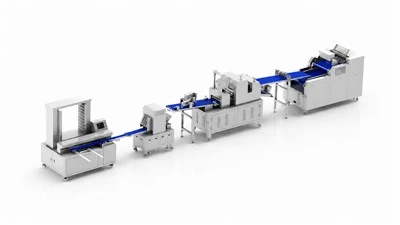
At the end of the day, installing a flatbread production line isn’t a quick project — but it’s an investment, and taking the time to do it right will save you months of headaches and thousands in lost sales later. If you’re ready to talk through your specific needs, no generic quotes, no hidden fees — hit us up to chat about your timeline, space, and how to get your line up and running when you need it. We’ll even send a tech out to your facility for a free site assessment, no strings attached.
Cookie Machine REFERENCES
- Bakery Production and Maintenance Journal, "Best Practices for Industrial Food Equipment Installation", 2022
- National Restaurant Association, "Commercial Kitchen Layout & Equipment Setup Guidelines", 2021
- Flatbread Industry Association, "Production Line Efficiency Standards", 2023
- Food and Drug Administration, "Industrial Food Facility Electrical & Utility Requirements", 2020
Shanghai Longyu Electro-Mechanic Technology Co., Ltd.
Shanghai Longyu Electro-Mechanic Technology Co., Ltd. is one of the most professional flatbread production line manufacturers and suppliers in China, featured by quality products and good service. Please feel free to wholesale advanced flatbread production line made in China here from our factory. Also, custom service is available.
Address: No.66, Guangfulin East Road, Zhongshan Subdistrict, Songjiang District, Shanghai, China
E-mail: sales4@longyu-sh.com
WebSite: https://www.longyu-sh.com/
