Hey everyone, thanks for dropping by my corner of the industrial blog! I’m the lead guy over at the gross weighing bagger supply spot, and I get this question nonstop: “What’s the max weight a gross weighing bagger can handle?” It’s such a fair ask—if you’re hauling, packaging, or shipping bulk stuff, you don’t want to waste time on a machine that can’t keep up, or blow cash on one that’s way overkill for what you need. Let’s break this down like we’re chatting over a coffee, no stuffy jargon or overly technical fluff here. Gross Weighing Bagger
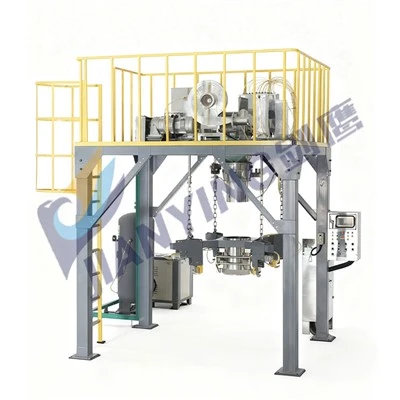
First off, let’s get the basics straight: a gross weighing bagger works different from those net weighers you might’ve seen. Gross weighing means you weigh the entire bag plus the product as one total unit, right? No separating the product from the container mid-package. That’s why the max weight ties to two core things: the machine’s design specs, and what you’re actually packing. I’ve seen so many folks mix those up—like ordering a machine that can handle 100lb bags for their 50lb coffee roasts, which is just throwing money out the window, or grabbing a 50lb machine for their 150lb grain batches, which is a mess.
Now, let’s talk about the hard numbers here. From what I’ve tested and what our team sees every day with clients, standard industrial gross weighing baggers usually cap out between 50lb (that’s like small feed bags or retail pet food) all the way up to 2,000lb. Wait, yeah—2,000lb. That’s the heavy-duty stuff, like agricultural grain, construction aggregates, or large bulk chemical drums. But hold on, that’s not a one-size-fits-all number. Let me explain why. The max weight isn’t just pulled out of thin air—we build it around a few key parts that handle the load.
First, the load cell. That’s the heart of the gross weighing system, right? Load cells are the sensors that measure weight. A gross bagger has one big load cell that supports the entire filling chute, bag holder, and the bag itself while it’s being filled. If you try to put more weight than the load cell is rated for, two bad things happen: either the sensor gets damaged, and it starts giving wonky weight readings (so your bags are either under or overfilled, which costs you money), or it just shuts down entirely mid-production, which halts your whole line. We size our load cells exactly to the max weight, so for our 2,000lb model, we use a 2,200lb rated load cell to build in a little buffer—you don’t want to run a sensor at 100% capacity 24/7, that’ll wear it out fast.
Then there’s the structural frame. The bagger’s frame has to support not just the weight of the product, but also the force of it falling into the bag. If you’re filling a 2,000lb bag, you’re probably dumping product from a hopper at a pretty fast rate—so the frame has to be thick steel, bolted tight, no flimsy welds. I once had a client who tried to use a frame that was rated for 1,000lb for 1,800lb feed bags. The frame bent after two weeks of use, and we had to come rebuild it for free because he didn’t realize the frame was as critical as the load cell. That’s why we always ask clients to send us their product type and filling rate before we even quote a machine—so we make sure the frame can handle the force, not just the static weight.
Wait, another big factor: bag size and material. You can’t put a 2,000lb load into a thin, flimsy poly bag that tears when you lift it. The max weight of the bagger also depends on what kind of bags you’re using. For example, if you’re using heavy-duty woven polypropylene bags, those can hold up to 2,200lb, so our machine can max out at 2,000lb. But if you’re using paper bags for flour, which only hold 50lb, you’d never need a machine over 60lb capacity. Same with valve bags vs. open-mouth bags—valve bags are sealed at the top, so they can hold heavier loads than open-mouth, which you tie or stitch shut. That’s why when a client says “I need a bagger that can handle 150lb,” we’ll ask if they’re using valve or open-mouth, just to make sure we’re matching the machine to their bag’s actual capacity.
Now, what about special cases? We’ve built custom gross weighing baggers for clients who need way more than 2,000lb—like 5,000lb for big bulk mineral bags, or even 10,000lb for industrial raw materials. Those are not standard off-the-shelf models, obviously, but we do them all the time. The trick there is reinforcing the load cells in parallel, so instead of one sensor holding the weight, we have two or four smaller load cells split the load, which lets us hit way higher weights without straining anything. I had a mining client last year who needed to fill 8,000lb bags of crushed stone, and we built a custom machine with four 2,500lb load cells, so total capacity was 10,000lb. That worked way better than trying to find a standard machine that could handle that—no one makes a 8,000lb standard bagger, so custom is the way to go there.
Wait, let’s clear up a common misconception I hear all the time: “Can I run my machine at a higher weight than the max just for a little while?” No, not really. Even if you only need a few extra pounds for a special order, it’s not worth it. Like, if your machine’s max is 1,000lb and you try to fill a 1,100lb bag, that extra 100lb might not break the machine right away, but it’ll shorten the load cell’s life, stress the frame, and could lead to spillage or the bag tearing mid-fill. We’ve had clients who tried this, and after a month, their load cell was giving readings that were 10% off, so they were either giving away 100lb of product per bag or getting fined for overfilling. That cost them way more than if they’d just upgraded to a higher capacity machine.
Another thing to consider: production speed. The max weight also ties into how fast you’re filling. If you’re filling 50lb bags at 10 per minute, that’s 500lb per minute total throughput, so the machine doesn’t need to be as heavy-duty as one filling 2,000lb bags at 2 per minute (that’s 4,000lb per minute). Wait, no—actually, higher throughput with lower weight is easier, but higher weight with lower throughput is where you need the machine built tough. For example, a 2,000lb bagger running 1 bag per minute is a lot less stressful than running 5 bags per minute, because you’re not dumping 10,000lb into the system every minute. So when we size a machine, we also ask about their target production rate, because that affects how much we reinforce the parts.
Let me give some real examples from our clients, to make this concrete. Last quarter, we had a client who runs a small pet food brand. They were using a 50lb gross bagger, and needed to switch to 80lb bulk bags for their warehouse bulk sales. I didn’t want them to buy a 100lb machine and pay extra for capacity they didn’t need, so we modified their existing 50lb machine’s load cell and frame to handle 80lb instead. That cost them way less than a new machine, and it worked perfectly for their needs—they don’t need to go above 80lb, so no point in overspending. On the other end, we had a construction company that needed to fill 1,500lb bags of sand. They initially wanted a 1,000lb machine, but we showed them that the 1,500lb model was only a few hundred dollars more, and the 1,000lb would have been too weak and slowed down their production. They went with the 1,500lb, and now they’re filling 500 bags a day without any issues.
What about if you’re just starting out, and you don’t know exactly what weight you’ll need? That’s a common problem for small businesses. My advice here is to go a little above your current needs, but not way over. For example, if you’re currently filling 50lb bags, and you think you might expand to 75lb in a year, get a 100lb machine. It’s only a small extra cost up front, and you won’t have to buy a new machine a year later. If you’re not sure if you’ll ever go heavier, stick to your current product’s max weight—don’t pay for capacity you’ll never use. That’s the mistake a lot of new businesses make, wasting money on machine features they don’t need.
Now, let’s talk about maintenance, because that affects how much weight your bagger can actually handle over time. If you keep your machine clean, lubricate the moving parts, and calibrate the load cell every month, it’ll hit its max weight for years. But if you let dust, product residue, or rust build up on the frame or load cell, that adds extra weight that the machine has to carry. For example, if your load cell has 10lb of dust on it, that’s like adding 10lb to every bag you fill, so your effective max weight goes down. I once had a client who didn’t clean their grain bagger for 6 months, and the load cell was reading 20lb too heavy, so they were underfilling all their bags. When we cleaned the hopper and load cell, it went back to normal, and they were able to fill full bags again without overloading.
Wait, another question I get: “Do all gross weighing baggers have the same max weight?” No way. Like I said earlier, the standard goes 50lb, 100lb, 200lb, 500lb, 1,000lb, 2,000lb, and custom over that. But different brands build them different ways. Some cheaper models use smaller load cells or thinner frames, so their max is lower than ours. We design our machines with industrial-grade parts, so our max is reliable—you won’t have a 2,000lb machine that only actually handles 1,500lb because of cheap parts. That’s why it’s important to buy from a supplier that stands behind their machines, not just the lowest bid.
So putting this all together, the short answer is: a standard gross weighing bagger can handle anywhere from 50lb to 2,000lb, with custom models going up to 10,000lb or more. But the real max weight depends on your load cell rating, frame strength, product type, bag material, and production speed. There’s no one number that works for everyone, which is why it’s so important to talk to someone who builds these machines, not just guess based on what you see online.

Now, if you’re in the market for a gross weighing bagger, or you’re not sure what capacity you need, hit me up. I’ve helped dozens of clients from small startups to big corporations find the right machine for their needs, no hidden fees or sales pitches for stuff you don’t need. I can answer all your questions about max weight, capacity, or any other part of the process. Don’t waste time on a machine that’s too small for your products or too expensive for your budget—let’s chat, and we’ll figure out the perfect fit for you.
Net Weighing Bagger References:
- American Society of Agricultural and Biological Engineers (ASABE). (2021). Standard S571: Gross Weighing Methods for Bulk Agricultural Products.
- Packaging Machinery Manufacturers Institute (PMMI). (2022). Industrial Bagging Equipment Capacity Guidelines and Load Cell Specifications.
- Food and Drug Administration (FDA). (2020). Guidelines for Bulk Food Packaging Equipment Load Capacity and Durability.
- Construction Products Association (CPA). (2021). Guidelines for Heavy-Duty Bulk Packaging Equipment for Aggregates and Raw Materials.
- Industrial Maintenance and Repair Association (IMRA). (2022). Preventive Maintenance Practices for Extending Gross Weighing Bagger Load Cell and Frame Life.
Wuxi Jianying Intelligent Equipment Co., Ltd.
We are one of the most professional gross weighing bagger manufacturers and suppliers in China, featured by quality products and good price. Please rest assured to buy durable gross weighing bagger for sale here from our factory. Welcome to contact us for custom service and OEM service.
Address: No.88, Xinyang Road, Ehu Town, Xishan District, Wuxi City, Jiangsu Province, P.R.China
E-mail: wuxijianying@163.com
WebSite: https://www.wuxijianying.com/
