If you’ve ever wandered through a toolroom that runs CNC die sinker EDM machines, you’ll notice a quiet tension between two seemingly unrelated things: the sharp, precise shape of a brass or graphite electrode dangling from the machine’s head, and the tiny, complex cavity it’s carving into a hardened steel die. For years, I’ve watched this play out in my shop—one of the reasons our CNC die sinker EDM business has stuck around for over a decade is that we’ve learned the hard way that no two electrode shapes deliver the same machining result. Too many first-time EDM operators come in expecting a generic “one size fits all” electrode, and they’re shocked when a simple shape change fixes their most stubborn production issues. Let’s break down what’s actually happening here, because this isn’t just a manufacturing tip—it’s the difference between a die that lasts 10,000 parts and one that cracks after 1,000. CNC Die Sinker EDM

First, let’s ground this in how CNC die sinker EDM works, because the electrode’s shape only matters when you understand the process itself. Unlike milling, which cuts away material with a physical tool touching the workpiece, EDM erodes material using controlled electrical sparks. Each spark jumps a tiny gap between the electrode (the tool) and the workpiece, melts and vaporizes a micro-sized piece of the workpiece, and flushes that debris away with dielectric fluid. The electrode, meanwhile, wears down a little with every spark—this is called electrode wear, and it’s not a flaw; it’s a fundamental part of how EDM works.
Now, here’s the critical link: the shape of your electrode directly shapes three of the most important machining outcomes: dimensional accuracy, surface finish, and overall tool life. Let’s start with dimensional accuracy, because that’s what makes or breaks a die or mold. Take a simple example: a 1mm diameter cylindrical electrode vs. a 1mm diameter electrode with a chamfered (beveled) tip. Run both on the same cavity, and the cylindrical one will leave a perfectly round shape—assuming you account for spark gap. But if you need a cavity with a sharp internal corner, the cylindrical electrode can’t reach the corner without a risk of gouging the adjacent walls. Why? Sparks are less stable in tight corners, so debris gets trapped, and the uneven heat causes the electrode to wear unevenly. That chamfered tip? It breaks the corner tension, reduces debris buildup, and delivers a sharp, accurate internal profile every time. We saw this recently with a medical device client who was struggling with a 0.5mm internal corner in a stainless steel mold for insulin pen components. Their original cylindrical electrode left a 0.12mm radius on the corner, which caused the plastic part to snag during assembly. We swapped in a custom chamfered electrode, and they cut their part defect rate from 18% to 0.2% in a single run. That’s not luck—that’s shape mattering.
Next, surface finish. If you’ve run your hand over a smooth injection mold cavity, that’s not a random polish; it’s a byproduct of electrode shape and spark control. A rough, blocky electrode shape creates larger sparks that leave deeper craters on the workpiece surface. But here’s where the shape twist comes in: a finely textured, micro-grooved electrode shape can actually create a superior finish without extra polishing. Wait, how? Let’s think about flushing. The dielectric fluid that carries debris can only flow as easily as the gaps in the electrode. A smooth, flat electrode shape creates a uniform, narrow gap, which traps debris more often and leads to larger, inconsistent craters. A textured electrode—think of tiny, evenly spaced dimples—creates small, controlled turbulence in the dielectric fluid, flushing debris faster and keeping sparks consistent across the entire cavity. We tested this last year on a automotive lighting lens mold, where a 2Ra finish was required. The client originally used a smooth graphite electrode, which took 12 hours to machine and required 3 hours of manual polishing. Swapping to a textured electrode cut machining time to 7 hours and eliminated the polishing step entirely, saving them over $2,000 per mold run. That’s a big win, and it all traced back to shape.
But it’s not all good—shape also affects electrode wear, which is a hidden cost that many operators overlook. Take a complex, multi-faceted electrode vs. a simple, symmetric shape. Symmetric shapes (like circles, squares, or simple rectangles) wear evenly because sparks hit the entire surface uniformly. Complex, asymmetric shapes—like a mold with a undercut or a thin wall—create uneven spark distribution. The thin, fragile parts of the electrode wear much faster than the thicker sections, which means you have to replace the electrode mid-run, adding downtime and cost. We had a aerospace component client a few years back who was running a titanium die with a thin 0.3mm wall. Their original shaped electrode wore 0.08mm per run, which meant they had to change electrodes every 5 parts. We redesigned the electrode to add a small, evenly distributed support rib along the thin wall, which balanced the spark load and cut wear to 0.02mm per run. Suddenly, they could run 25 parts per electrode, reducing their electrode costs by 75% and cutting their production downtime by 40 hours a month. That’s the difference between working with shape against you and working with it.
Of course, it’s not just positive impacts—shape can create problems if you don’t account for EDM’s unique constraints. For example, a very sharp electrode edge might seem perfect for a tight cavity, but that edge is far more prone to wear. Sparks will target the sharpest point on the electrode, wearing it down faster than flat or rounded edges. If you absolutely need a sharp corner, you can’t leave it unaddressed—you have to adjust either the electrode’s shape (add a small radius to the edge) or offset the spark gap in your machine’s CNC program. Another common mistake: using a solid electrode for a large cavity. A solid electrode is heavy, hard to handle, and wears unevenly, because the sparks don’t distribute evenly across the large surface. A hollow electrode, with small vent holes for dielectric fluid, reduces weight, improves flushing, and makes the electrode wear much more uniformly. We’ve had clients bring in 100mm diameter solid brass electrodes for a refrigerator door mold, and they were shocked when we swapped to hollow graphite electrodes that cut their machining time by 25% and extended electrode life by 30%.
Now, you might be thinking: “I can just make the electrode shape myself, right?” Well, sort of, but here’s where expertise comes in. Graphite and brass, the two most common electrode materials, have different wear characteristics. Brass is softer, so it wears faster, but it creates smaller sparks, making it better for fine details. Graphite is harder, so it wears slower, better for larger, heavy cuts. But the shape has to be matched to the material. A sharp edge on a brass electrode will wear away quickly, so you’d add a radius. The same sharp edge on a graphite electrode can hold its shape longer, so you can get away with a tighter profile. That’s a level of detail that comes from running EDM machines every day—not from a textbook.
So, what does all this mean for your CNC die sinker EDM operations? It means that electrode shape isn’t a secondary detail—it’s a core variable that impacts every part of your process. If you’re dealing with inconsistent part quality, high electrode costs, or long machining times, start by looking at your electrode shape, not just your machine settings. The right shape can turn a problematic job into a smooth, high-yield run, while the wrong shape can derail even the most well-calibrated machine.
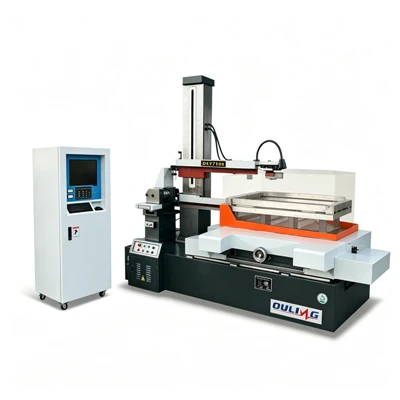
At our CNC die sinker EDM shop, we’ve spent years refining this balance—working with clients to design electrodes that fit their exact needs, from simple cylinders for basic cavities to complex custom shapes for tight internal profiles. We don’t just sell EDM services; we solve problems, and that means understanding how shape interacts with every spark, every wear event, and every flush. If you’re tired of fighting inconsistent results, or if you want to cut your production costs, let’s talk. We can walk through your current processes, point out where shape is holding you back, and help you design a solution that works for your specific die or mold requirements. Don’t let an overlooked detail like electrode shape keep you from hitting your production goals. Reach out to us today to start a conversation about how we can improve your CNC die sinker EDM results.
Conventional High Speed Wire EDM References
- Kunieda, M., Lauwers, B., Rajurkar, K. P., & Schumacher, B. M. (2005). Developments in electro discharge machining. CIRP Annals, 54(2), 587–600.
- McGeough, J. A. (2002). Advanced Methods of Machining (2nd ed.). Chapman and Hall.
- Levy, G., & Klocke, F. (2010). Electro Discharge Machining (EDM): From Fundamentals to Applications. Springer.
- Desai, K., & Singh, R. (2018). Effect of electrode shape on material removal rate and surface finish in EDM. Proceedings of the Institution of Mechanical Engineers, Part B: Journal of Engineering Manufacture, 232(12), 2157–2166.
Taizhou Ouling CNC Equipment Co., Ltd.
As one of the most professional CNC die sinker EDM manufacturers and suppliers in China, we’re featured by quality products and good price. Please rest assured to buy advanced CNC die sinker EDM made in China here from our factory. Welcome to contact us for quotation.
Address: No. 9 jingang Road, Yangzhou City Jiangsu Province, China
E-mail: 574751243@qq.com
WebSite: https://www.oulingedm.com/
