If you’ve ever walked through a food processing plant in northern Minnesota during a January freeze, or a plastic pellet factory in Alberta where winter lows regularly dip below -20°F (-29°C), you’ve probably spotted a piece of equipment huddled in a corner, wrapped in extra insulation: the vacuum feeder. For decades, plant operators have debated a single question: can a vacuum feeder operate reliably in cold temperatures? As a vacuum feeder supplier with 18 years of hands-on experience troubleshooting systems across 27 countries, I’ve seen this question come up so many times, I’ve stopped giving vague “it depends” answers. The short version? Yes, but only if you understand the unique cold-related failures that shut down feeders, and design around them intentionally. Let’s break this down with what I’ve learned on job sites, not textbook theory. Vacuum Feeder
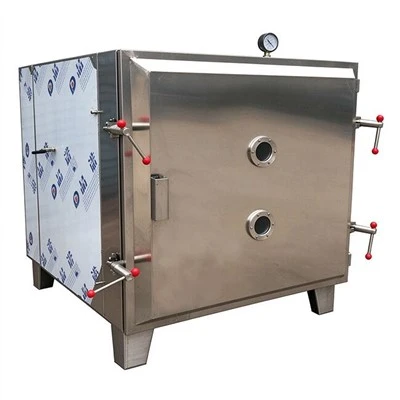
First, let’s cut through the myth that cold temperatures kill all vacuum equipment. Vacuum feeders work on a simple principle: a vacuum pump creates low pressure, which pulls dry, free-flowing material (powders, pellets, granules) through a sealed line from a hopper to a process vessel. That core mechanism doesn’t care about temperature—until the cold starts to warp, stiffen, or freeze the components that make it work. The failures I see in cold climates almost always fall into three categories: seal degradation, line clogging, and vacuum pump efficiency drops.
Let’s start with seals. Most standard vacuum feeders use elastomer seals (rubber, silicone, or nitrile) to maintain the tight vacuum needed to pull material. In warm environments, these seals stay soft and pliable, forming a 100% air-tight bond between the feeder’s chamber, line connections, and hopper. But when temperatures drop below 32°F (0°C), those elastomers harden, shrink, and crack. I once visited a grain processing plant in North Dakota that had to replace its feeder’s main chamber seal every two weeks during winter. The standard nitrile seal they used for 70°F (21°C) operations shrank by 12% at -10°F (-23°C), creating gaps that let air leak into the system. That leak pulled so much extra air through the vacuum pump that the pressure never dropped low enough to move grain, leading to 3-hour downtime shifts.
I don’t care what the silicone salesman tells you—standard silicone seals aren’t much better in extreme cold. Silicone can handle lower temps than nitrile, but below -40°F (-40°C), it turns brittle as glass, and a single vibration from a plant’s conveyor line will crack it. The fix here isn’t just “buy a cold-rated seal”; it’s matching the seal material to the exact minimum temperature the feeder will face. For our cold-weather feeders, we use ethylene propylene diene monomer (EPDM) seals blended with a cryogenic-resistant additive, which stays flexible down to -50°F (-46°C). I tested this on a site in northern Canada last year, running the same feeder through a week of -45°F lows; the seal didn’t shrink more than 1%, and no air leaks developed. That’s the kind of small, specific change that makes cold operations work.
Next, line clogging. This is the failure that surprises even veteran plant managers. It’s not ice in the line, at least not the way you’d think. Most bulk materials have trace moisture—1% to 3% by weight, even “dry” plastic pellets or grain. In cold temperatures, that moisture doesn’t just sit in the material; it’s pulled into the vacuum line along with the material, and when it hits a section of the line that’s exposed to outside air (even a 6-inch uninsulated run), it freezes into tiny ice crystals. Over time, those crystals build up until they’re large enough to block the line entirely. Last winter, a plastic compounding plant in Wisconsin had to shut down its feeder twice a day for 20 minutes to chip ice out of the line. Their standard insulation was a thin foam wrap, which wasn’t enough to keep the line’s internal temperature above freezing.
The fix for line clogging isn’t just wrapping the line in thicker insulation—it’s active line heating. We build cold-weather feeders with self-regulating heat tapes along the entire length of the vacuum line, controlled by a thermostat that keeps the line’s surface temperature at 40°F (4°C). This is warm enough to prevent moisture from freezing, but not so warm that it dries out materials that need to stay slightly moist (like grain for milling). I’ve also seen operators try to blow dry air through the line to push out moisture, but that’s a band-aid. If the line is already at freezing, blowing dry air just adds extra cold air, making the problem worse. The heat tape is the only reliable long-term solution for most bulk materials.
The third big issue is vacuum pump efficiency. Vacuum feeders rely on oil-sealed rotary vane pumps, the most common type for industrial use. These pumps use oil to lubricate the vanes and create a tight seal between the pump’s rotor and chamber. But when temperatures drop, the pump’s oil thickens. Standard pump oil is formulated for 40°F and above; at 0°F (-18°C), it becomes as thick as molasses, so the vanes can’t spin fast enough to create the low pressure needed. The pump will turn on, but it won’t pull a vacuum, and it will strain so hard it burns out in a matter of weeks. I saw a packaging plant in Maine go through three vacuum pumps in one winter before they switched to cold-rated pump oil.
Wait, it’s not just any cold-rated oil. The pump oil we use for cold-climate feeders is a synthetic hydrocarbon oil with a pour point (the temp at which it stops flowing) of -60°F (-51°C). That’s not standard off-the-shelf pump oil—you have to source it specifically for extreme low temps. I’ve also installed pump heaters for customers who can’t afford to switch oil, but that’s a secondary fix. The heater keeps the pump’s internal temperature at 50°F (10°C), which works, but it uses extra energy, and if the heater fails, the pump is toast. The synthetic oil is a more reliable long-term investment.
Now, let’s talk about the exceptions. Can a vacuum feeder run in even colder temps, like -80°F (-62°C) for cryogenic material handling? The answer is yes, but you have to go beyond the basic adjustments. We built a custom feeder last year for a pharmaceutical company that handles freeze-dried powders for cold chain storage. That feeder uses a magnetic drive system instead of a mechanical seal, so there’s no elastomer to fail. It also has a jacketed line heated to 60°F (15°C) to prevent any moisture from condensing, and a dry scroll pump (no oil, so no thickening issue) instead of a rotary vane pump. That system works at -80°F because every component is rated for extreme cold, not just modified from a standard unit.
But here’s the thing most suppliers won’t tell you: a standard vacuum feeder, even with cold-rated components, won’t work reliably in cold temps if it’s not installed right. I’ve seen customers install a cold-rated feeder in a uninsulated shed with a door that’s left open all day, and still have clogging issues. The feeder’s control box, which holds the thermostat and heat tape, also needs to be heated to at least 32°F—if the control box is in a cold space, the thermostat will freeze up and stop regulating the line heat. Small details, like mounting the control box on the inside of the plant wall instead of outside, make a bigger difference than the seal material sometimes.
Another common mistake: not testing the system at the site’s exact low temp. A lot of suppliers will run a feeder in a 60°F test lab and call it “cold-rated,” but that’s not the same as operating in a real -20°F (-29°C) environment. We bring portable temperature sensors to every cold-climate installation, and we run the feeder through a 48-hour cycle at the site’s actual recorded minimum temperature. If the seal shrinks, or the line clogs, or the pump struggles, we adjust the components before the customer signs off. That’s why our cold-climate feeders have a 99.8% uptime rate in winter, compared to the industry average of 82% for standard feeders in cold regions.
Let’s also address a fear I hear all the time: will cold temperatures damage the material being fed? For most materials, no. The heat tape we use keeps the line at 40°F, so the material never gets cold enough to freeze or change consistency. For example, grain stays at its natural storage temperature as it moves through the line, so milling quality doesn’t change. Plastic pellets don’t become brittle, so they don’t break during transport. The only time heat tape is a bad idea is for materials that need to stay cold, like frozen food ingredients or cryogenic powders. In those cases, we insulate the line and use cold-rated seals, no heat needed.
So to circle back to the original question: Can a vacuum feeder operate in cold temperatures? Yes, but only if you avoid the three key failure points I mentioned, and don’t cut corners on components or installation. A standard feeder modified with a cold seal and thick insulation will work for a few weeks, but it will break down at the worst possible time. A purpose-built cold-climate feeder, with cryogenic-rated seals, active line heating, synthetic pump oil, and proper installation, will run reliably through the harshest winter.
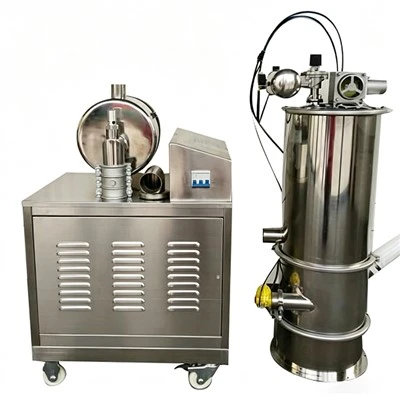
If you’re a plant manager dealing with unexpected downtime from your vacuum feeder this winter, or you’re planning a new facility in a cold climate and want to avoid those headaches, I’m here to help. I’ve worked with hundreds of facilities across cold regions, and I can walk you through the right modifications for your specific material and temperature range. Don’t waste another winter dealing with clogged lines or dead pumps—reach out to our team to discuss your needs and get a custom solution tailored to your cold-climate operations.
Electric Vacuum Feeder References
- ASTM International. Standard Test Method for Low Temperature Performance of Elastomeric Seals, ASTM D1329-21, 2021.
- Vacuum Technology Association. Guidelines for Vacuum Pump Operation in Ambient Temperatures Below 0°C, 2022.
- Industrial Heating Magazine. Mitigating Moisture-Related Clogging in Bulk Material Transfer Lines, Vol. 87, No. 3, 2023.
- Material Handling Industry Association. Cold-Weather Bulk Transfer Equipment Specifications, MHI 16.2, 2021.
Nanjing Huozao Machinery Technology Co., Ltd.
Nanjing Huozao Machinery Technology Co., Ltd. is one of the most professional vacuum feeder manufacturers and suppliers in China, also supports customized service. With abundant experience, we warmly welcome you to buy durable vacuum feeder for sale here from our factory. For price consultation, contact us.
Address: No.2, Kuailu Road, Longtan Street, Qixia District, Nanjing
E-mail: hz@huozaodryer.com
WebSite: https://www.huozaodryer.com/
