If you’ve ever stood at a loading dock in the middle of a summer afternoon, watching profiled conveyor belts haul raw materials or finished goods across an exposed warehouse bay or an outdoor construction site, you’ve probably wondered: Will this belt hold up to relentless sunlight? As a profiled conveyor belt supplier who’s worked with industrial operations across North America for over a decade, this question comes up at least twice a week from procurement managers, plant supervisors, and maintenance teams. The answer isn’t a simple “yes” or “no”—it depends on a handful of factors, and getting it right can mean the difference between a belt that lasts two months and one that runs three years without a replacement. Let’s break this down like we do in our weekly technical check-ins with clients. Profiled Conveyor Belt
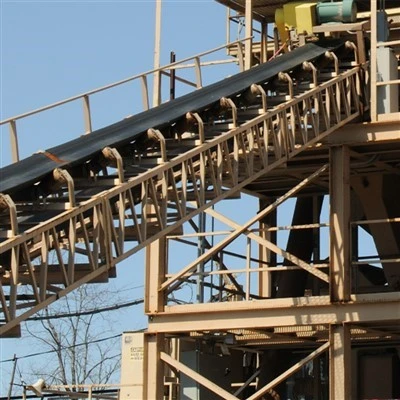
First, let’s clarify what a profiled conveyor belt is, because not everyone uses the term the same way. Unlike flat conveyor belts, which are smooth and designed for general material transport, profiled belts have molded, raised profiles along their top surface—think cleats, sidewalls, or herringbone patterns. Those profiles prevent bulk materials like grain, gravel, or packaged goods from sliding off the belt as it moves at steep angles, whether that’s climbing to a processing plant roof or navigating a 30-degree incline in a mine. That raised texture, while incredibly functional, is also more exposed to UV light than a flat belt would be. Sunlight doesn’t just make things fade; it breaks down the molecular structure of rubber and PVC, the two most common materials for profiled belts. When UV rays hit a polymer, they split chemical bonds, turning flexible rubber brittle over time, or making PVC crack and lose its tensile strength.
So, are all profiled conveyor belts UV resistant? No. A budget profiled belt made from standard natural rubber or general-purpose PVC? That’s essentially a sun magnet. We once had a client in Arizona who bought a $2,000 profiled belt from a no-name supplier to move potash from an outdoor storage pile to a loading truck. That belt was exposed to 12 hours of direct sunlight a day, 110-degree heat, and constant dust. It cracked along the cleats in 57 days. By contrast, a client in a similar climate used a UV-stabilized profiled belt from our catalog, and it’s still running strong four years later. The difference comes down to additives. UV-resistant profiled belts aren’t just rubber or PVC—they’re engineered with stabilizers that absorb or deflect UV rays before they can damage the polymer.
Let’s dive into those stabilizers, because this is where a lot of suppliers cut corners. For rubber profiled belts (the go-to for heavy-duty mining, construction, and agriculture), we use two primary UV stabilizers: carbon black and hindered amine light stabilizers (HALS). Carbon black is the most common, and for good reason—it’s cheap, it absorbs almost all UV light, and it also adds wear resistance, which is a win-win for belts hauling abrasive materials. But not all carbon black is created equal. Low-grade carbon black, like what’s used in car tires, might protect the rubber from UV, but it can also make the belt stiff and prone to cracking when flexed around pulleys. That’s why we use a medium-channel carbon black with a particle size of 20 to 30 nanometers for our profiled belts—it hits that sweet spot between UV protection and flexibility.
HALS, on the other hand, are chemical compounds that act like “repair kits” for broken molecular bonds. When a UV ray splits a bond in the rubber, HALS molecules latch onto that broken spot and rebuild it, instead of letting the damage spread. We add HALS to our profiled belts for operations that get a lot of indirect sunlight, like warehouse bays with large skylights or outdoor loading docks that have partial shade. It’s more expensive upfront than straight carbon black, but it extends the belt’s lifespan by an average of 18 months for those clients. For PVC profiled belts (used more in food processing, packaging, and light manufacturing), the stabilizer mix is a little different. PVC is more vulnerable to UV than rubber, so we add benzophenone-based UV absorbers and a small amount of carbon black to keep it from discoloring or becoming brittle.
Now, it’s not just the material and additives—how the belt is installed and maintained affects its UV resistance, too. We’ve seen perfectly good UV-stabilized profiled belts fail in six months because the client didn’t cover the belt when it was stored on-site. If you leave a new belt rolled out in the sun for a week before installation, the UV rays will start breaking down the edges of the belt and the molded profiles before it even touches a conveyor. On the flip side, a non-UV belt can last a little longer if you provide some shade. We had a grain farm client in Iowa who runs their profiled belt between an outdoor silo and an indoor processing plant. They added a simple fabric canopy over the conveyor path, and their budget non-UV belt lasted 10 months instead of three. That’s a quick, cheap fix that works for low-exposure outdoor use.
Another thing to consider is the type of profiled design. Sidewall belts, which have vertical molded walls along the edges to hold bulk material, have more surface area exposed to UV than a cleated belt, which only has raised cleats every few inches. That means sidewall belts need a higher concentration of stabilizers. We have a client in British Columbia who runs a sidewall profiled belt moving lumber chips up a steep incline to a pulp mill, with no shade at all. Their sidewalls are 8 inches tall, and we specified a UV-stabilizer blend that’s 15% higher than our standard cleated belts, and it’s lasted for five years without any cracking.
Let’s talk about common myths, because we get these questions all the time. First myth: All black profiled belts are UV resistant. No—even a black belt made with low-grade carbon black will break down in direct sunlight within a few months, because the carbon black doesn’t block all UV if it’s not properly dispersed. Our black belts get their color from well-dispersed medium-channel carbon black, which is different from the cheap stuff used in random plastic products. Second myth: UV resistance only matters for outdoor use. Wrong—indirect sunlight from warehouse windows, skylights, or even fluorescent lighting (some types emit UV rays) can add up over time. We have a client in a food packaging plant where their profiled belt runs inside, but near a glass wall that gets 8 hours of sun a day. They used a standard indoor profiled belt, and it started cracking along the edges after 14 months; switching to our low-level UV-stabilized belt fixed that, and it’s now at 28 months with no issues. Third myth: UV resistance makes the belt more expensive. It is a small upfront increase (usually 10-15% more than a non-UV belt), but when you calculate the cost of downtime, replacement parts, and labor to swap out a belt every few months, it’s almost always a better investment. A $500 difference now can save you $5,000 in unexpected downtime and replacements a year later.
We test every single one of our UV-stabilized profiled belts to make sure they hold up. We use a standard accelerated weathering test, which puts belts in a chamber that mimics 1,000 hours of direct sunlight and temperature changes in just a few weeks. Our belts pass that test with no cracking, no loss of tensile strength (the ability to pull heavy loads), and no peeling of the profiles. We also do field testing with clients in extreme climates—from the Arizona desert to the Canadian tundra—to make sure the belts work in real-world conditions, not just a lab. Last year, we sent a sample of our UV-stabilized cleated profiled belt to a client in the UAE, who runs it 24/7 moving construction materials. It’s now in its third year, and our technical team went out to inspect it last month—no significant wear or UV damage at all.
So, when should you choose a UV-resistant profiled conveyor belt? If your belt runs outdoors, even with a little shade; if it’s exposed to more than 4 hours of direct sunlight a day; if it’s a sidewall profiled belt (which has more surface area exposed); or if downtime for replacement would cost you more than the 10-15% premium for a UV-stabilized belt. If your belt is entirely indoors, with no UV exposure, and you’re on an extremely tight budget, a standard non-UV profiled belt might work. But for 90% of the clients we work with, a UV-stabilized profiled belt is worth the investment.
At the end of the day, the biggest mistake we see is a client choosing a belt based solely on price, without considering its UV resistance. A profiled belt is a long-term asset, not a disposable part. We’ve had clients call us in a panic because their outdoor profiled belt cracked and got stuck on the pulleys, shutting down their production line for 8 hours. That’s a lot more expensive than paying a little extra upfront for a belt that can handle the sun.

If you’re in the market for a profiled conveyor belt and you’re worried about UV resistance, or you’re dealing with a belt that’s failing due to sun damage, reach out to our team to discuss your needs. We can help you select the right material, stabilizer blend, and profile design to make sure your belt lasts as long as possible, even in the harshest sunlight. Together, we can avoid the frustration of premature belt failure and keep your operations running smoothly.
Self Cleaning Conveyor Belt References
- Heap, M. (2012). Conveyor Belt Technology: Design, Materials, and Maintenance. Elsevier.
- ASTM D4329-13, Standard Practice for Xenon Arc Exposure of Plastics, ASTM International.
- Koerner, R. M. (2005). Designing with Geosynthetics (5th ed.). Pearson Education.
- British Standard BS EN ISO 10320:2018, Conveyor Belts – Determination of Resistance to Ultraviolet Radiation.
Alumina Technology (Qingdao) New Materials Co., Ltd.
As one of the most professional profiled conveyor belt manufacturers and suppliers in China, we also support customized service. With abundant experience, we warmly welcome you to buy profiled conveyor belt for sale here and get quotation from our factory. For price consultation, contact us.
Address: No.448, Jiangshan South Road, Huangdao District, Qingdao City, Shandong Province
E-mail: Gloria.zhang@contitech.cn
WebSite: https://www.altechconveyorbelt.com/
