Hey there, if you’ve ever worked in a factory, processed food, or even dabbled in water treatment, chances are you’ve seen a plunger positive displacement pump—but didn’t know it by name. Let’s break this down like I would when chatting with a client who just asked, “Wait, how is this different from a regular centrifugal pump anyway?” First, let’s keep it simple: “positive displacement” just means it moves a fixed amount of fluid each cycle, no matter the back pressure (within reason, of course). It’s not like a centrifugal pump that pushes fluid by spinning an impeller and creating suction. This is a whole different animal—think of it as a “measure and push” system, not a “spin and suck” one. Positive Displacement Pump
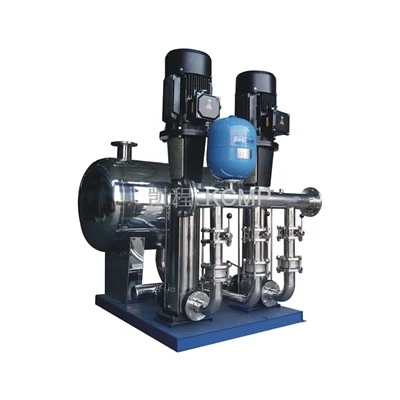
A plunger positive displacement pump uses a rigid, cylindrical plunger (like a super sturdy piston, but tighter, more precision-machined) that moves back and forth in a sealed cylinder. When the plunger pulls back, it creates a vacuum that draws fluid into the cylinder through an inlet check valve. Then, when the plunger pushes forward, that same check valve closes tight, and an outlet check valve pops open, pushing the exact same volume of fluid out each time. No slipping, no slippage, so the flow rate is consistent every single cycle. That’s the big draw.
Now, let’s talk about where this actually matters. I work with a ton of food and beverage clients, for example. They need to pump things like heavy cream, chocolate syrup, or even tomato paste—stuff that’s thick, viscous, and would make a centrifugal pump clog or burn out fast. Centrifugal pumps shear those fluids, ruining texture or breaking down ingredients. A plunger pump? It moves that thick stuff smoothly, no shearing, no mess. Same with oil and gas: when you’re pumping crude oil, it’s not water—it’s sticky, dense, and often has small solids mixed in. Plunger pumps handle that without wearing out too quickly, because the design is built for high pressure and rough fluids. Wastewater treatment too: pumping sludge that’s full of grit or debris, plunger pumps can handle that way better than other types, since the plunger and cylinder are hardened to resist wear.
Wait, let’s clear up a mix-up sometimes people make: plunger vs. piston pumps. Yeah, they’re both positive displacement, but the plunger is the one that actually seals against the cylinder wall—there’s no ring seal like a piston has. That means less leakage, longer life for high-pressure applications. So if you’re pumping at 1,000 PSI or higher, a plunger pump’s the go-to. Piston pumps are more for lower pressure, lower volume stuff.
Now, why work with a supplier like me? Not all plunger pumps are created equal. I’ve seen clients buy cheap ones off Alibaba, only to have them clog after a month, or leak all over their factory floor. A good plunger pump is made from materials that fit your fluid: if you’re pumping food, you need 316 stainless steel, not some cheap cast iron that’ll rust. If you’re pumping chemicals, you need something resistant to corrosion, like Hastelloy. Also, the precision of the plunger and cylinder—if there’s even a tiny gap, slippage happens, and your flow rate drops. That’s a big problem for applications like metering chemicals, where you can’t afford to over-dosage or under-dosage.
Let’s throw in a real example I had last quarter. A craft brewery came to me with a problem: they were using a centrifugal pump to transfer their unfiltered beer from the fermentation tank to the bottling line. The centrifugal pump was shearing the yeast, which made the beer taste “off” and cloudy right before bottling. They tried a diaphragm pump next, but it couldn’t handle the viscosity of the unfiltered beer—too much back pressure, so the flow rate was inconsistent. We swapped in a medium-duty plunger pump, and boom: the yeast stayed intact, the flow rate was spot-on every time, and they’ve had zero issues for six months. That’s the kind of result I live for.
Another thing to note: plunger pumps can be either single-acting or double-acting. Single-acting means it only draws and pushes fluid on one stroke of the plunger—so half the time, it’s just idling. Double-acting pumps do both suction and discharge on every stroke, so way more consistent flow rate, less pulsation. For applications where pulsation is a problem (like metering chemicals for a water treatment plant, where pressure spikes can mess up downstream sensors), you might add a pulsation dampener, but double-acting plunger pumps cut that need way down.
What about maintenance? Let’s be real—no one wants a pump that’s a nightmare to fix. Plunger pumps are actually pretty straightforward to service, as long as you get a quality model. The main wear parts are the plunger, the seals, and the check valves—all easy to replace, no big disassemble job. I usually tell clients to do a quick check of the seals every 3-6 months, depending on the fluid, and replace the plunger every 1-2 years if you’re pumping heavy stuff. Cheaper pumps often have seals that are one-size-fits-all, but good suppliers give you seals matched to your fluid (like Viton for chemicals, EPDM for food stuffs) so they last longer.
Wait, let’s address a common question: can these pumps handle high flow rates? Yeah, you can have multiple plungers in one pump (called a multi-plunger pump) that work in sync to push way more fluid. That’s how oil and gas pipelines work—multi-plunger pumps that push thousands of gallons a minute at high pressure. For smaller applications, like a lab pumping small volumes of reagent, you can get a tiny single-plunger pump too. It’s versatile, which is why it’s used across so many industries.
Now, why should you care if you’re looking for a pump? If your current pump is clogging, shearing your product, or inconsistent, it’s probably time to switch. I’ve had clients come to me frustrated with centrifugal pumps for viscous fluids, or diaphragm pumps that fail under pressure, and a plunger pump is almost always the fix. But you don’t want to just pick any plunger pump—you need one tailored to your exact use case. For example, if you’re pumping food, it has to be FDA-compliant. If you’re pumping corrosive chemicals, it has to have the right material construction. If you need precise metering, the plunger’s precision is non-negotiable.
I can’t stress that enough as a supplier. We don’t just sell a one-size-fits-all plunger pump. We ask about your fluid, your flow rate, your pressure, your material needs, even your budget (without skimping on quality). We’ll test the pump with your actual fluid before it ships if you want, so you know it’ll work when it arrives. That’s the difference between us and a big-box pump site—we’re here for the long haul, not just a sale.
Let’s wrap this up: a plunger positive displacement pump is a reliable, precise workhorse that moves fixed volumes of fluid with no slippage, handles thick, viscous, or corrosive stuff, and is customizable for almost any industry. It’s not the flashiest pump, but it’s the one that keeps factories running, food safe, and pipelines moving.
If you’re dealing with a pump that’s not cutting it—clogging, inconsistent flow, shearing your product, or just wearing out way too fast—hit us up. We’ll walk you through the options, answer any questions, and get you set up with a pump that actually works for your needs. Don’t settle for a cheap, off-the-shelf pump that’ll cost you more in repairs down the line.
Positive Displacement Pump References:
- Karassik, I. J., et al. Pump Handbook. 4th ed., McGraw-Hill Professional, 2007.
- Positive Displacement Pump Association. “Plunger Pumps: Design and Application Guidelines.” PDPA Technical Report, 2021.
- Food and Drug Administration. “Materials Used in Food Equipment: Pump Construction Standards.” FDA Food Safety Modernization Act (FSMA) Guidance, 2020.
- Oil and Gas Supply Association. “High-Pressure Plunger Pumps for Upstream Operations.” OGSA Technical Bulletin, 2019.
- Wastewater Treatment Industry Association. “Pump Selection for Sludge and Biosolids Handling.” WTIA Best Practices Guide, 2022.
Zhejiang Kaicheng Pump Valve Co., Ltd.
Zhejiang Kaicheng Pump Valve Co., Ltd. is one of the most professional positive displacement pump manufacturers and suppliers in China, also supports customized service. We warmly welcome you to buy advanced positive displacement pump made in China here and get quotation from our factory. For price consultation, contact us.
Address: No.501 Zhangbao North Road, Dong ou Industrial Park, Oubei town, Yongjia, Zhejiang Province, China
E-mail: sales@cnkcmp.com
WebSite: https://www.kcmpumps.com/
