If you’re in the market for rotor assembly systems, odds are you’ve heard the term “CNC rotor assembly line” thrown around, maybe even confused it with a regular conveyor or a basic hand tool setup. Let me break this down like I would to a shop manager who’s been grinding out parts for 15 years—no jargon, no fluff, just the stuff that actually moves the needle. Rotor Assembly Line
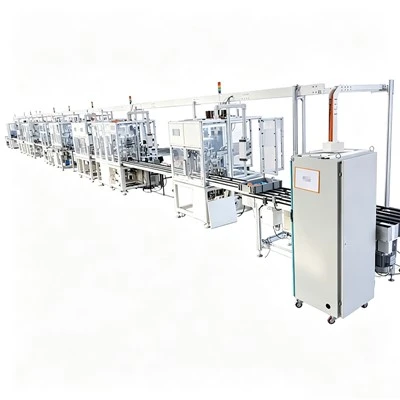
First, let’s get the basics straight: a rotor assembly line is the whole process of putting rotors (those round, heavy core parts for motors, turbines, compressors, whatever) together, right? Like, you don’t just slap a shaft into a stack of laminates and call it a day. You have to press, balance, weld, test, inspect—all that messy, precise work. A CNC (computer numerical control) rotor assembly line is that entire process automated, controlled by computers, so you get consistency, less waste, and way faster turnaround than old-school manual lines.
Here’s the thing I see a lot of shops mess up: they think a CNC line is just a robot arm and a computer. Nah, it’s an integrated system that’s built to fit your exact part, not a one-size-fits-all box I can sell you off the shelf. Let’s walk through how one actually works, step by step, so you get what you’re paying for.
Start with the feed station. This is where raw materials come in—laminated steel stacks, rotor shafts, maybe end caps, bearings, all the tiny bits that make up a rotor. On a good line, we’ve got loaders that are either manual (for small runs, prototypes) or robotic (for high-volume production, like 10k rotors a month and up). The CNC’s brain is already programmed here to scan each part as it comes in, check for defects before it even moves to the next step. If a laminate has a burr or a shaft is slightly bent, the line spits it out automatically—no wasting time trying to fix garbage. That’s one of the biggest wins over manual: you don’t have a line worker staring at 500 parts a day and missing a tiny flaw that’ll cause a failure later.
Next up: the core stacking and pressing. Rotors are made of those thin steel laminates, right? Stacking them straight is make-or-break. If they’re off by even a fraction of a millimeter, the rotor will vibrate like crazy once it’s running. On a CNC line, we use servo-controlled stackers that feed each laminate perfectly aligned, then press ’em together with a set force—we program that pressure based on your rotor’s specs. No more manual stacking where two laminates slip and you have to rework half the batch. I’ve seen shops cut their stack defects from 8% to less than 1% just by switching to a CNC-controlled press station.
Then comes the shaft insertion. This is where a lot of manual lines struggle: pressing a steel shaft into a soft steel laminate stack can cause too much force, bend the shaft, or not enough force so the shaft wiggles later. Our CNC lines use load cells to measure pressure in real time—if the press detects it’s applying too much force halfway through, it adjusts automatically, or stops and alerts the operator. That means you get a press fit that’s consistent every single time, no surprises.
After the shaft is in, usually you move to balancing. Wait, balancing is non-negotiable for rotors, right? A slightly unbalanced rotor will wear out bearings, cause noise, even break the whole system down. On a CNC rotor assembly line, the balancer is linked straight to the line’s main computer. Once it spins the rotor up, it tells the next station exactly where to add weight (or remove it, if it’s a high-speed turbine rotor) to fix the imbalance. No more marking the rotor by hand and grinding it later—this is all automated, so you don’t have human error there. I had a customer a couple years back who was reworking 12% of their rotors for balancing; after installing our line, that number dropped to 0.5%. Saved them like $40k a month in rework costs, easy.
From there, it’s usually locking the stack together—either by welding, riveting, or using locking rings, depending on what your rotor’s for. For automotive motors, we might use resistance welding that the CNC controls to make sure each weld is the right size, depth, and strength. For bigger industrial rotors, maybe friction welding, which is super precise and doesn’t add extra material. The key here is the CNC adjusts the process based on the data from the earlier steps—if the laminate stack was a little thinner than spec, it tweaks the weld parameters so it still holds tight.
Then testing, and this is another big part. A good CNC line isn’t just assembling parts—it’s testing every rotor before it leaves. We do electrical tests (for motor rotors, checking for short circuits), leak tests (for compressor rotors, making sure no air gets through), and final balance rechecks. All that data gets logged, too—so if you have a failure down the line, you can pull up exactly how that rotor was made, what parts went into it, every step. That’s huge for quality control, especially if you’re supplying to big OEMs that trace every part.
Now, let’s talk about why this matters for your shop, not just some techy numbers. I sell these lines, so I’ll be straight with you: I’ve had shops come to me saying “I just need a line to put rotors together faster” and others that have had bad experiences with off-the-shelf CNC lines that don’t fit their parts. The wrong line will end up costing you more in downtime, rework, and training than it saves.
For example, if you’re a small shop doing custom rotors for agricultural equipment (low volume, maybe 500 units a month), you don’t need a line that can crank out 100k a day. You need a flexible CNC line that’s easy to reprogram when you switch to a new rotor model, no 3-month retooling job. I design my lines so the CNC’s programming is intuitive—operators don’t need a computer engineering degree to run it. That’s a big pain point for my customers: they didn’t hire a team of coders, they hired people who know rotors, so the line has to work for them, not the other way around.
On the flip side, if you’re a high-volume auto supplier, you need a line that’s super fast, almost zero downtime, and has built-in predictive maintenance. My lines feed that data to a dashboard, so you can see when a press is due for a part change before it breaks, not after it stops the whole line. That’s the difference between a $10k downtime cost and a $200 part swap that happens during a lunch break.
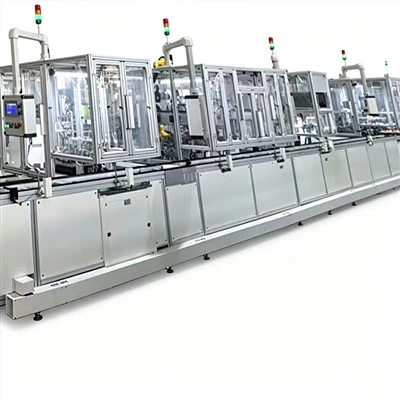
I also see a lot of people confuse CNC rotor assembly lines with manual lines that “have a CNC touchscreen.” No, that’s not a CNC line. A real CNC line is integrated—every station talks to each other. The balancer sends data to the welding station, which adjusts its settings. The feeder checks parts and rejects bad ones before they get to the press. It’s not a bunch of separate machines lined up; it’s one system that works as a single unit.
Another myth: these lines are only for big companies. I’ve installed lines for shops with as few as 8 employees that doubled their rotor output in a year, with only one extra operator. The key is sizing it right. You don’t have to buy a full 10-station line if you only need 3 stations for your current production. We can build ’em modular, so you can add more stations as your business grows. That’s a big one—no need to drop a huge chunk of change upfront for stuff you don’t need yet.
Now, let’s get real about pain points I hear all the time. Old assembly lines: operators getting repetitive stress from pressing parts, misaligning laminates, missing defects, rework that eats into profit. A good CNC line fixes that. One customer of mine, a 20-person shop that makes HVAC motor rotors, was dealing with 3 hours of rework a day. After we installed our line, they reworked 15 minutes a day, tops. That’s time they can use to take on more orders, not fix mistakes.
And let’s talk about consistency. If you’re supplying to an OEM, they don’t want 50 good rotors and 10 that wiggle. They want every single one the same. A CNC line does that—every press force, every alignment, every weld is identical, no matter the shift, no matter which operator is running the line. I had a customer who lost a big contract because their manual lines had a 5% defect rate; after switching to our line, they got the contract, and it’s been renewing every year since.
But here’s the thing: a CNC rotor assembly line isn’t a set-it-and-forget-it investment. You need someone to work with you to build it for your parts, train your team, and support it after it’s installed. I don’t just sell a line and dip. I stick around to help with programming tweaks, training, any issues that come up. Because if my line isn’t working for you, it’s not working for me.
So if you’re tired of rework, slow production, inconsistent parts, or losing contracts because your assembly line can’t keep up, a CNC rotor assembly line is probably what you need. But don’t go buying the first one you see. Talk to someone who gets rotor assembly, not just generic automation, someone who’ll build a line that fits your exact parts, your volume, your budget.
If you want to stop messing around with lines that hold you back, reach out. We can walk through your current process, figure out what you need, no sales pitch, just straight talk about what’ll work for your shop.
Hairpin EV Motor Assembly Line References:
- Groover, M.P. Automation, Production Systems, and Computer-Integrated Manufacturing. Pearson, 2020.
- American Society of Mechanical Engineers (ASME). “Rotating Equipment Balance Standards,” ASME PTC 19.19-2018.
- Manufacturing Extension Partnership (MEP). “Automated Assembly for Medium-Volume Rotor Production,” NIST, 2022.
- International Organization for Standardization (ISO). “Quality Management Systems for Automotive Production,” ISO/TS 16949:2016.
Juli Aoxuan Technology (Zhejiang) Co., Ltd.
Juli Aoxuan Technology (Zhejiang) Co., Ltd. is one of the most professional rotor assembly line manufacturers and suppliers in China. With abundant experience, we warmly welcome you to buy durable rotor assembly line made in China here from our factory. If you have any enquiry about cooperation, please feel free to email us.
Address: No.28, Guangming Middle Road, Haiyou Street, Sanmen County, Taizhou City, Zhejiang Province, China
E-mail: sales05@juli-china.com
WebSite: https://www.juli-winding.com/
