As a supplier of vacuum-metalized PE film, I get this question all the time—especially from customers who are new to flexible packaging or industrial materials: What’s the real difference between vacuum metalized PE film and metalized nylon film? It’s a fair ask. Both look like shiny, metallic films at first glance, but dig a little deeper, and they’re built for totally different jobs. I’ve spent years troubleshooting with packaging engineers, matching materials to end-use needs, and seeing firsthand how choosing the wrong one can turn a great product into a costly mess. Today, I want to break this down not just with technical specs, but with real-world context that matters when you’re placing a purchase order. Vacuum-Metalized PE Film
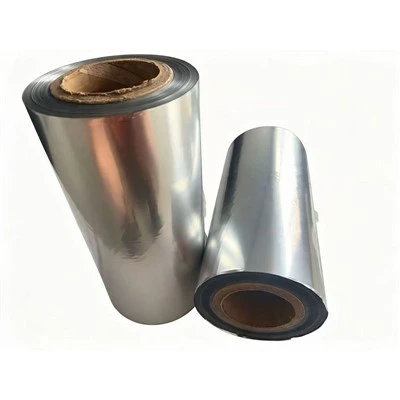
Let’s start with the basics, because that’s where most people trip up. Vacuum metalization itself is a process, not a material. It works like this: you put a base film into a vacuum chamber, heat a thin metal (usually aluminum, 99.9% pure for our products) until it turns to vapor, and that vapor condenses onto the film’s surface, forming a ultra-thin layer—usually 20 to 100 nanometers thick, thinner than a single strand of spider silk. The goal is to add metallic properties (light reflection, barrier, shine) without ditching the base film’s core strengths. So the difference between the two comes down to what base film we’re metalizing in the first place: low-density polyethylene (LDPE) or linear low-density polyethylene (LLDPE) for vacuum-metalized PE film, and nylon (also called polyamide, PA) for metalized nylon film.
That base film is the backbone, and its properties drive almost every key difference. Let’s talk flexibility first. I’ve had a food packaging customer come to me upset because their metalized nylon film kept cracking during high-speed bagging. Metalized nylon is rigid—nylon itself is much stiffer than PE, so when you metalize it, that rigidity amplifies. It’s strong and puncture-resistant, which is great for heavy-duty packaging like pet food or industrial parts, but it doesn’t bend easily without stress. When you run it through a machine that forms bags and seals them, or when a shipment gets bounced around, the metal layer (the part that gives the shine and barrier) can develop micro-cracks. Those cracks break the aluminum’s continuity, ruining its oxygen and moisture barrier.
Vacuum-metalized PE film, on the other hand, is inherently flexible. PE is a stretchable, pliable polymer—think of a plastic grocery bag, which is made of LDPE. When we metalize it, the thin aluminum layer follows that flexibility almost seamlessly. It can bend, stretch, and fold thousands of times without cracking. That’s why it’s the go-to for packaging that gets flexed: snack wrappers, candy boxes, and labels that are applied to curved containers. I saw a recent case where a craft chocolate brand switched to metalized PE film for their bar wrappers. Before, they used metalized nylon, and their wrappers would crack during shipping, leading to some chocolate bars getting discolored. Since switching, they’ve had zero crack-related issues. That’s not just a minor win—for a brand that prides itself on premium packaging, that’s the difference between good reviews and bad ones.
Next up: barrier performance. This is where the confusion gets even trickier. A lot of people assume “metallic” means equal barrier, but it’s not that simple. The aluminum layer adds a vapor barrier to any base film, but the base film’s natural properties will either boost or limit that. Metalized nylon is king here for dry barrier. Nylon itself is a good barrier to gases like oxygen and moisture, and when you add the vacuum-deposited aluminum layer, it’s often strong enough to be used as a standalone packaging material for products that need long shelf life, like nuts or coffee. It can keep oxygen out for years, which prevents rancidity.
Vacuum-metalized PE film, though, has a different strength: moisture barrier, specifically for high-humidity environments. PE’s natural structure makes it highly resistant to water vapor. When you add the aluminum layer, that moisture resistance jumps even higher—way higher than metalized nylon, in most cases. I’ve worked with frozen food suppliers who swear by metalized PE film for ice cream packaging. Metalized nylon would absorb moisture over time, leading to ice crystal formation and freezer burn. Our vacuum-metalized PE film, on the other hand, locks in the product’s moisture and keeps freezer burn away for months. That’s a huge deal for frozen goods, where shelf life is measured in years, not months.
Then there’s heat resistance and sealing, which is non-negotiable for packaging applications. If you’re sealing bags with heat, you need the film to hold up to that heat without melting or deforming. Metalized nylon can handle temperatures up to around 120°C (248°F) before the base film starts to break down. That’s good for applications like sterilized medical packaging, where high-temperature steam is used to sterilize the package. But for most consumer packaging, that’s overkill—and metalized nylon’s high sealing temperature is actually a downside. It takes more energy to seal, which increases production costs for bagging machines. It’s also less compatible with cold-seal adhesives, which are popular for flexible snack wrappers because they don’t require heat.
Vacuum-metalized PE film, by contrast, has a lower melting point—usually around 105°C (221°F) for LDPE-based versions. That means it seals at a lower temperature, uses less energy, and is compatible with a wider range of sealing methods, including cold seal. That’s why 90% of the snack packaging I supply is vacuum-metalized PE film. It’s cheaper to run on high-speed bagging lines, and it doesn’t warp or shrink during sealing, which reduces waste from misaligned seals. I’ve had a major chip brand test both materials for their line of thin, air-filled chip bags. Metalized nylon kept causing seal failures because it required too much heat, while vacuum-metalized PE film sealed perfectly on their 1,200-per-minute line.
Durability and cost are two more factors that buyers almost always ask about. Let’s start with durability. Metalized nylon’s biggest strength is puncture resistance—nylon is tough, so it can withstand rough handling, sharp edges, and heavy weights. That makes it ideal for packaging items like metal parts, pet food kibble that can be sharp, or outdoor gear. But as I mentioned earlier, that rigidity comes with a tradeoff: it’s prone to metal layer cracking, and it’s not as resistant to impact flex. Drop a metalized nylon bag from waist height, and you might get a crack that ruins the barrier. Drop a vacuum-metalized PE bag, and the film will stretch instead of cracking, so the aluminum layer stays intact. I once did a side-by-side test for a construction supply company: they used both materials for small fastener bags. After being dropped 10 times from 6 feet, 12% of the metalized nylon bags had broken barriers, compared to 2% of the vacuum-metalized PE bags.
Cost is where I see the most misconceptions. Metalized nylon is more expensive upfront than vacuum-metalized PE film. Nylon resin itself costs more than PE resin, and metalizing nylon is a bit more technically intensive because it’s more prone to warping during the process. But that’s not the end of the story—total cost of ownership matters. If you’re running a high-speed packaging line, the lower energy cost of sealing vacuum-metalized PE film can offset the material’s slightly lower upfront cost. If you’re packaging heavy, sharp items, metalized nylon’s higher puncture resistance might save you money on product damage, even if the material costs more. It all comes down to your specific use case. For example, a candy wrapper that never gets dropped: vacuum-metalized PE is cheaper and works perfectly. A bag of 50-pound metal bolts: metalized nylon is worth the extra cost to prevent tears and rust.
Wait, let’s also touch on optical properties, because that’s a big part of why metallic films are used for branding. Metalized nylon has a deeper, more saturated metallic shine. The rigid base film allows the aluminum layer to form a very smooth, even surface, so the reflection is more mirror-like. That’s why you see metalized nylon used for luxury branding elements like cosmetic packaging or high-end gift boxes. Vacuum-metalized PE film has a slightly softer, more matte metallic finish. The PE film’s natural surface has a tiny bit of texture, which softens the aluminum’s reflection. That’s not a bad thing—brands often prefer it for snack packaging because it doesn’t look too harsh, but if you’re going for a super premium, mirror-like shine, metalized nylon is the way to go.
I want to be clear here: neither material is “better” than the other. They’re just different tools for different jobs. I’ve seen suppliers force metalized nylon onto a job that would work better with PE, and vice versa, and it always ends badly. Let’s sum up the key takeaways so you don’t have to memorize a bunch of specs: if you need flexibility, crack resistance, low-cost sealing, and good moisture barrier for consumer packaging, snacks, frozen foods, or labels—go with vacuum-metalized PE film. If you need high puncture resistance, extreme temperature tolerance, or long-term gas barrier for heavy-duty industrial packaging, medical supplies, or dry goods like nuts or coffee—metalized nylon is the right choice.
As someone who’s specialized in vacuum-metalized PE film for over a decade, I know how overwhelming it can be to choose the right material for your product. There’s no one-size-fits-all answer, and small differences in specs can have big impacts on your packaging performance and bottom line. If you’re not sure which material works for your application, or if you’d like samples, custom quotes, or guidance on how to integrate these films into your packaging line, I’m here to help. We’ve worked with brands small and large to match the right vacuum-metalized film to their unique needs, and we’re happy to walk you through every step of the process to find the best solution for your products. Feel free to reach out to discuss your requirements.
Colored CPP Film References
- Han, S., & Kim, J. (2021). Vacuum metalized polymer films for flexible packaging: A review of material properties and applications. Journal of Packaging Science and Technology, 30(2), 112-128.
- Welle, F. (2019). Flexible Packaging Materials: Performance and Selection. Wiley Publishers.
- American Society for Testing and Materials (ASTM). (2020). Standard Test Methods for Water Vapor Transmission of Films and Sheeting, ASTM E96.
- European Flexible Packaging Association (EFPA). (2022). Technical Guide to Vacuum Metalized Films for Packaging Applications.
Qingzhou Huiyuan Packaging Materials Co., Ltd.
As one of the most professional vacuum-metalized pe film suppliers in China since 1997, we’re featured by quality products and good service. Please feel free to buy cheap vacuum-metalized pe film made in China here from our factory. For price consultation, contact us.
Address: Naoshan Industrial Park, Shaozhuang Town, Qingzhou City, Weifang, Shandong Province, China.
E-mail: 15864598133@163.com
WebSite: https://www.huiyuanfilms.com/
