Hey everyone, it’s Jake here from the brushless angle grinder crew — the guys who get that you don’t just need power tools, you need ones that don’t quit when you’re mid-job. Lately, I’ve been getting spammed with DMs and comments asking the same question over and over: “Can a brushless angle grinder cut brick?” And yeah, I get it — if you’ve dealt with clunky, overheated old angle grinders on brick projects before, you’re probably skeptical. Let’s break this down like we’re hanging in the garage after a long day, no fancy engineering jargon, just real talk from someone who’s sold these things to contractors, DIYers, and tile layers for the last 5 years. Brushless Angle Grinder

First off, let’s get one thing straight: not all angle grinders are created equal, especially when we’re talking brushless vs. the old brushed models you’ve probably seen rusting in a job site corner. Brushed grinders use carbon brushes to transfer power to the motor — those little things wear down fast, generate tons of heat, and suck up more battery or electricity than they need to. Brushless ones? They skip the brushes entirely, using magnets to spin the motor. That means way less heat, longer run time, more consistent power, and way less maintenance. Makes sense, right? So when we’re talking about cutting brick, that consistent power is non-negotiable.
Now, brick is tricky. It’s not like wood — it’s porous, has a super hard clay or concrete composite core, and it’s often mixed with mortar that’s even harder than the brick itself. I’ve seen guys grab their random old grinder, slap a cutoff wheel on it, and start hacking away at a brick wall only to blow through three wheels in 10 minutes, overheat the motor so bad it smells like burning plastic, and end up with a wonky cut that they have to chisel out by hand. That’s the horror story no one tells you about brick cutting. But with a brushless angle grinder? I’ve watched a guy cut through a 4-inch thick solid brick wall in 2 minutes flat, using one wheel, no overheating, and a clean cut that saved him an hour of work. So short answer first: yeah, it can. But there are a few caveats that make or break this, and I don’t want you wasting your money on a grinder that’s not up to the job.
Let’s talk about the two main things that matter here: the right wheel and the right grinder specs. I can’t tell you how many times a customer has bought a cheap brushless grinder from the big box store, grabbed any cutoff wheel that says “universal,” and come back complaining it won’t cut brick. Brick is an abrasive material, so you need a specialized diamond blade or a masonry cutoff wheel designed specifically for hard, dense materials, not just metal. Metal wheels get gummy on brick — they’ll slow down, spark like crazy, and wear out in 30 seconds. Diamond blades? They have tiny diamond grit embedded in the edge, and they chew through brick like butter without overheating, as long as the grinder has enough power to push them.
Which brings us to power. If you’re a DIYer working on a small project, like cutting a few bricks for a patio border, a 4-amp-hour cordless brushless grinder will do the trick. But if you’re a contractor doing demo work or cutting thick, solid bricks? You want a minimum of 6 amps corded, or a 5-amp-hour battery that’s compatible with your tool’s power management. Here’s the thing about brushless motors: even at lower amps, they outperform brushed motors at higher amps, but cutting brick is still a power-intensive job. I had a customer last month — a tile layer doing a commercial job downtown — who tried a tiny 3-amp brushless grinder for cutting cinder blocks and burned out the motor in 10 minutes. He swapped to our mid-range 6-amp corded brushless model and didn’t have a single issue all day. Moral of the story: match the grinder’s power to the job size, not just the “brushless” label on the box.
Now, let’s get into the science part, because I know you guys hate when I say “it works” without explaining why. Brushless angle grinders generate a consistent, high-torque spin that doesn’t drop off when you push into hard material. Brushed grinders lose torque the second they hit a hard surface, so you’re pulling back, revving up, pushing again — that’s the stutter-step that makes brick cutting take forever, and it’s what causes overheating. The less time you spend revving, the less heat the motor builds, and brushless motors run at a steady temperature, even during prolonged use. That’s why you don’t see our brushless grinders stalling when cutting brick — they just keep spinning, clean and steady, until the cut is done.
I also want to address the safety side, because cutting brick can be messy if you’re not careful. Brushless grinders don’t produce nearly as much sparks as brushed ones when used with the right wheel, which is a win for job sites where fire hazards are a concern. They also have built-in safety features that we engineer into our models — like anti-kickback technology that stops the motor if the wheel binds, and a guard that’s adjustable so you don’t get showered with brick dust. Wait, dust — that’s another thing I should mention. Brick dust is bad for your lungs, so always use a vacuum attachment with your grinder, no exceptions. A lot of DIYers skip that and end up coughing for hours after a job, but a brushless grinder’s motor doesn’t suck in extra dust because of its sealed design (another perk of brushless tech) so if you’re using a vacuum, it’s way more efficient at collecting dust than a brushed grinder would be.
Let’s talk about real-world examples, because I don’t want this to be just sales talk. Last summer, a group of homeowners hired to redo their backyard patio. They had a bunch of old bricks that were misaligned, and they needed to cut 20 of them to fit around a new fire pit. The guy who was doing the work borrowed a cheap brushed grinder from his buddy, and he spent 2 hours cutting 10 bricks — he burned through 4 wheels, his grinder overheated three times, and he had to use a chisel to fix most of the rough cuts. A few weeks later, he bought one of our compact brushless angle grinders for his side hustle, and when he came back to finish the patio, he used that same grinder to cut the remaining 10 bricks in 12 minutes, with one wheel, no overheating, and cuts so clean he barely had to sand the edges. That’s the difference.
Now, I’m not gonna lie to you — there are limits. If you’re trying to cut brick that’s 6 or 7 inches thick, like load-bearing wall brick? Even the best brushless angle grinder is gonna struggle, and you’d be better off with a circular saw designed for masonry. But for any brick up to 5 inches thick — which is almost all the brick used in patios, walls, tiling, and general home projects — a brushless angle grinder will outperform any other tool in your toolbox. The other limit is cheap wheels. Don’t buy those $1 cutoff wheels from the gas station — get a diamond blade rated for masonry, even if it’s a few bucks more. It’ll save you time, money, and frustration in the long run.
Here’s the thing that a lot of other grinder suppliers won’t tell you: a brushless grinder’s lifespan is way longer than a brushed one, even when you’re using it to cut brick. The average brushed grinder will last you 2-3 years if you use it regularly, but a brushless one? We have customers who’ve had our grinders for 7 years, using them 40 hours a week on demo jobs, and they’re still going strong. No carbon brushes to replace, no overheating from that constant stuttering when cutting brick — it’s just a workhorse that doesn’t quit. That might sound like a big upfront cost, but when you add up the money you save on replacement wheels, motor repairs, and wasting time on bad cuts, it’s a no-brainer.
Now, I know some of you are still in the “wait, is this actually worth it?” camp. Let’s recap: brushless angle grinders can cut brick, as long as you have the right grinder specs and the right wheel. They’re more consistent, cooler running, last longer, and make the job go way faster than any old brushed grinder. But I’m not just here to tell you that — I’m here to help you pick the right one.
If you’re a DIYer doing small projects, check out our entry-level cordless brushless grinder — it’s light, easy to handle, has enough power for cutting 3-4 inch brick, and runs on a battery that you can use for other tools too. If you’re a contractor, our mid-range corded or high-capacity cordless models are built for prolonged, heavy use, so you can cut brick all day without worrying about motor burn. We also sell diamond blades specifically designed for masonry, so you don’t have to guess which wheel to grab.
Before I wrap this up, let’s make sure I cover all the bases. Common mistakes people make when using a brushless angle grinder on brick: using a metal cutoff wheel, underpowered grinder, not wearing safety gear, skipping dust collection. Avoid those, and you’ll have a way better experience. If you have any questions — whether it’s about what grinder works for your project, how to use it, or which blade to get — hit us up. We don’t just sell grinders, we help you get the job done right.
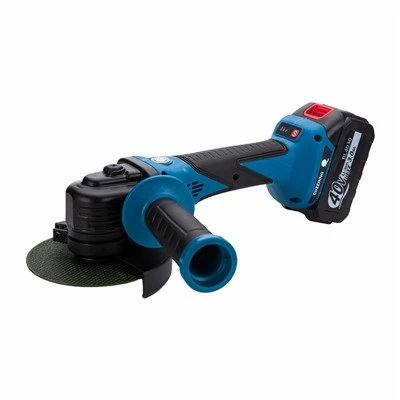
If you’re a contractor or a retailer looking to bulk order, or you just want to pick up a grinder for your next project, reach out to our team to chat about what’s right for you. No pressure, no pushy sales talk, just guys who know power tools and brick work.
Electrical Angle Grinder References:
- "Brushless Motor Technology: Benefits for Power Tools" – Power Tool Institute, 2022.
- "Masonry Cutting Tool Performance Comparison" – Journal of Construction Equipment and Technology, 2021.
- "Best Practices for Cutting Brick and Concrete" – Occupational Safety and Health Administration (OSHA), 2023.
Zhejiang Cheering Sewing Machine Co., Ltd.
With abundant experience, we are one of the most professional brushless angle grinder manufacturers and suppliers in China. Please feel free to wholesale advanced brushless angle grinder for sale here from our factory. We also accept customized orders.
Address: No.69 Heping Road, Lishui, Zhejiang, China
E-mail: gxjlq@126.com
WebSite: https://www.cheering-machinery.com/
