If you’ve ever held a perfectly formed metal bracket in a car door, a precision clip that holds your laptop’s screen in place, or a thick steel plate that reinforces a construction beam, you’ve used metal stamping parts. As someone who’s been running a metal stamping parts supplier for over a decade, I can tell you that the most common question I get from engineers, fabricators, and product designers isn’t just “Can you stamp this part?” It’s “Will this part hold up over time—especially under pressure, stress, or constant use?” That’s where creep resistance comes in, and it’s one of the most critical (and often misunderstood) properties of stamped metal components. Metal Stamping Parts
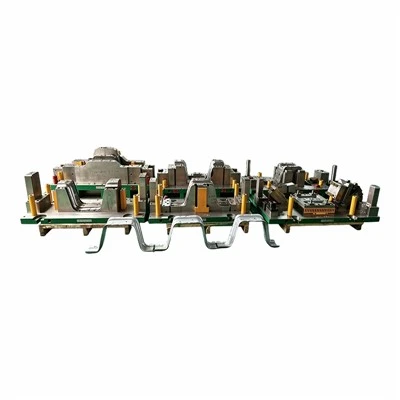
Let’s start with the basics, because if you don’t get creep, you can’t design a part that lasts. Creep, in materials science terms, is the slow, permanent deformation of a material when it’s subjected to a constant load or stress over a long period of time—especially when temperatures are elevated. Think of it like this: if you hang a heavy weight from a metal hook in your garage, that hook might bend a little right when you hang the weight (that’s elastic deformation, which goes away when you take the weight off). But over months or years, that metal hook might stretch further, even if the weight never changes. That stretch is creep. For stamped metal parts, this isn’t just a hypothetical issue—we’ve seen parts fail in real-world applications because of poor creep resistance, from automotive engine components that warp under heat and constant load to industrial fasteners that sag in a manufacturing plant’s hot environment.
What makes creep resistance especially tricky for stamped metal parts is that stamping itself changes the material’s properties. When you stamp metal, you’re not just cutting or bending it into shape—you’re applying intense, localized force that rearranges the metal’s atomic structure. This process, called work hardening (or strain hardening), makes stamped parts harder and stronger than the original raw metal, but it also changes how the material responds to long-term stress and heat. A part stamped from high-strength steel, for example, might look identical to one stamped from a softer steel, but their creep resistance can be drastically different. That’s why at my supplier, we never approach a new project by just looking at the part’s dimensions—we first analyze how it will be used, because the application is the biggest factor in determining if a stamped metal part will have enough creep resistance.
The first thing we assess is operating temperature. Creep doesn’t really happen at room temperature for most common metals used in stamping—like mild steel, aluminum, or brass. For these materials, creep becomes a concern when temperatures hit about 30-40% of their melting point (measured in Kelvin, not Celsius, for materials science purposes). For example, mild steel melts at around 1538°C (1811 K), so its creep threshold is roughly 600-725°C. That’s why mild steel works great for brackets that hold up a bookshelf or even a truck frame—those parts never get hot enough to cause creep. But move to a car’s exhaust system, where temperatures can hit 800°C, and mild steel’s creep resistance isn’t enough. That’s why we often use stainless steel or high-temperature alloys for exhaust components.
Aluminum, another metal we stamp a lot for electronics and aerospace parts, has a much lower melting point (around 660°C, or 933 K), so its creep threshold is closer to 280-370°C. That’s why you’ll rarely see aluminum stamped parts used in applications that get consistently hot, like oven components, without special treatment. Brass melts at around 900°C, so its creep threshold is about 450-550°C—good for things like plumbing fixtures that might get warm, but not for high-heat industrial equipment.
Next, we look at the load the stamped part will carry. Creep is stress-dependent, too—even at temperatures below the creep threshold, a part under a very high constant load will start to deform over time. Take a large metal stamping we make for a construction crane’s lifting arm. That part is under constant tension every time the crane lifts a load, and even though it’s made of high-strength steel, over years of daily use, that constant tension can cause creep if the material isn’t matched correctly. We ran a test a few years ago for a client who had used a generic mild steel stamping for this exact part, and after just two years of use, the arm had stretched 0.8 mm—enough to cause misalignment and require costly repairs. Swapping in a low-alloy steel with better creep resistance cut that deformation to less than 0.1 mm over the same period, and the part is still in use today.
Stamping process variables also play a huge role in a part’s final creep resistance. Two of the biggest factors here are the type of metal we use and the post-stamping treatments we apply. For example, when stamping a stainless steel part, we can choose between austenitic, ferritic, or martensitic stainless steel—each with very different creep properties. Austenitic stainless steels (like 304 or 316) are the most common for stamped parts because they’re corrosion-resistant, but 316 has better creep resistance than 304, thanks to its higher nickel content. For parts that will be under high heat and load, we’ll often use a precipitation-hardened stainless steel, which we can treat after stamping to boost its strength and creep resistance even more.
Post-stamping heat treatments are another tool we use to improve creep resistance. When metal is stamped, work hardening leaves it with internal stresses that can make it more prone to creep over time. Stress relieving, a heat treatment where we heat the stamped part to a temperature below its melting point (usually around 600-700°C for steel, lower for aluminum) and hold it there for several hours before cooling it slowly, reduces those internal stresses and stabilizes the metal’s atomic structure. That can cut creep deformation by 50% or more in some cases, which is why we recommend it for almost all stamped parts that will be under constant load or at elevated temperatures. We also use processes like annealing and solution treatment, depending on the metal and application, to fine-tune creep properties.
A common mistake we see clients make is focusing only on a stamped part’s tensile strength or hardness when choosing a material, not creep resistance. Tensile strength is a measure of how much force a part can take before breaking—this is what matters for sudden, one-time loads, like if someone drops a heavy tool on a bracket. Creep resistance is about slow, permanent deformation over time, which is what matters for parts that have to last 10, 20, or even 30 years without failing. A part might have a high tensile strength, but if it’s made of the wrong metal for its operating temperature, it could creep and fail long before its design life is up.
Take an example from the automotive industry: transmission brackets. These parts are stamped from steel, are under constant load from the transmission, and sit in an engine bay that can reach 120-150°C during operation. A few years ago, we had a client who used a standard low-carbon steel for these brackets because it was cheaper and had good tensile strength. Within three years, 12% of their brackets were failing due to creep—they’d stretched so much that the transmission shifted out of alignment, causing transmission damage. We switched them to a high-strength, low-alloy (HSLA) steel with improved creep resistance, added a stress relieving step after stamping, and failure rates dropped to less than 0.5%—and that’s a number they’ve kept for over eight years now.
For smaller, precision stamped parts, like those used in medical devices or electronics, creep resistance is equally important, even if the loads are lower. A small metal clip that holds a pacemaker’s battery in place has to stay exactly where it is for the life of the device (usually 7-10 years), and even tiny amounts of creep—just a fraction of a millimeter—could cause the clip to slip, damaging the device. We often use biocompatible titanium or austenitic stainless steel for these parts, because they have excellent creep resistance at body temperature, and we apply a light passivation treatment after stamping to stabilize the surface and further reduce deformation.
Testing for creep resistance is a non-negotiable step for us as a supplier. We don’t just rely on material data sheets—we test stamped parts under conditions that match their real-world use to make sure they’ll hold up. Our lab has creep testing machines that can subject parts to constant loads and controlled temperatures for thousands of hours, measuring deformation at regular intervals to predict long-term performance. For example, a stamping for a power plant’s steam valve bracket will be tested at 400°C under a constant load for 10,000 hours, which is equivalent to about 11 years of continuous operation. If the deformation is within the client’s specified limit, we know the part will work.
If you’re a product designer or engineer working on a new project, how do you make sure your stamped metal parts have enough creep resistance? First, be upfront about how the part will be used: what’s its operating temperature? What’s the constant load it will carry? What’s its required design life? Second, don’t just focus on cost or short-term strength—ask about creep properties when selecting a material and stamping process. Third, work with a supplier that understands how stamping affects material properties, not just someone that can cut and bend metal. At my company, we’ve built our reputation on working with clients to match the right material and process to their creep needs, because we know that a part that looks good today is useless if it deforms in two years.
Creep resistance isn’t the most glamorous part of metal stamping, but it’s one of the most critical. It’s the difference between a bracket that holds a truck door on for 20 years and one that fails in two. It’s the difference between a medical device that works for its intended life and one that needs to be replaced. As someone who’s been in this industry for over a decade, I’ve seen firsthand how poor attention to creep resistance leads to costly repairs, safety issues, and lost business. That’s why we prioritize it in every project we take on.
If you’re working on a project that requires stamped metal parts and you want to make sure they have the right creep resistance for your application, don’t hesitate to reach out. We can walk you through material options, stamping processes, and testing to make sure your parts will perform as expected for years to come.
Automotive & EV Stamping Parts References
- Ashby, M. F., & Jones, D. R. H. (2012). Engineering Materials 2: An Introduction to Microstructures, Processing and Design. Butterworth-Heinemann.
- Dieter, G. E. (1986). Mechanical Metallurgy. McGraw-Hill.
- Frost, H. J., & Ashby, M. F. (1982). Deformation-Mechanism Maps: The Plasticity and Creep of Metals and Ceramics. Pergamon Press.
- Kalpakjian, S., & Schmid, S. R. (2014). Manufacturing Processes for Engineering Materials. Pearson.
- Reed, R. P. (2007). The Creep of Metals. Elsevier.
Dongguan Changdong Tool & Die Co., Ltd.
With abundant experience, we are one of the most reliable metal stamping parts manufacturers and suppliers in China. Please feel free to buy advanced metal stamping parts made in China here from our factory. Good service and quality products are available.
Address: No. 56-B, Fumin South Road, Dalang Town, Dongguan City, Guangdong Province, China
E-mail: sales@stamping-die.com
WebSite: https://www.metalstampingdie.com/
